11 MAY 2026 - Editorials & Articals
|
Significance |
|
Prime Minister Modi’s appeal highlights India’s vulnerability to global energy disruptions and emphasizes responsible citizenship during economic crises. It underlines the importance of energy security, foreign exchange conservation, sustainable consumption, and reduced import dependence. The move also reflects India’s focus on economic resilience and preparedness amid geopolitical instability in West Asia. |
PM Modi’s ‘Nation First’ Appeal Amid the Iran War: Challenges and Implications
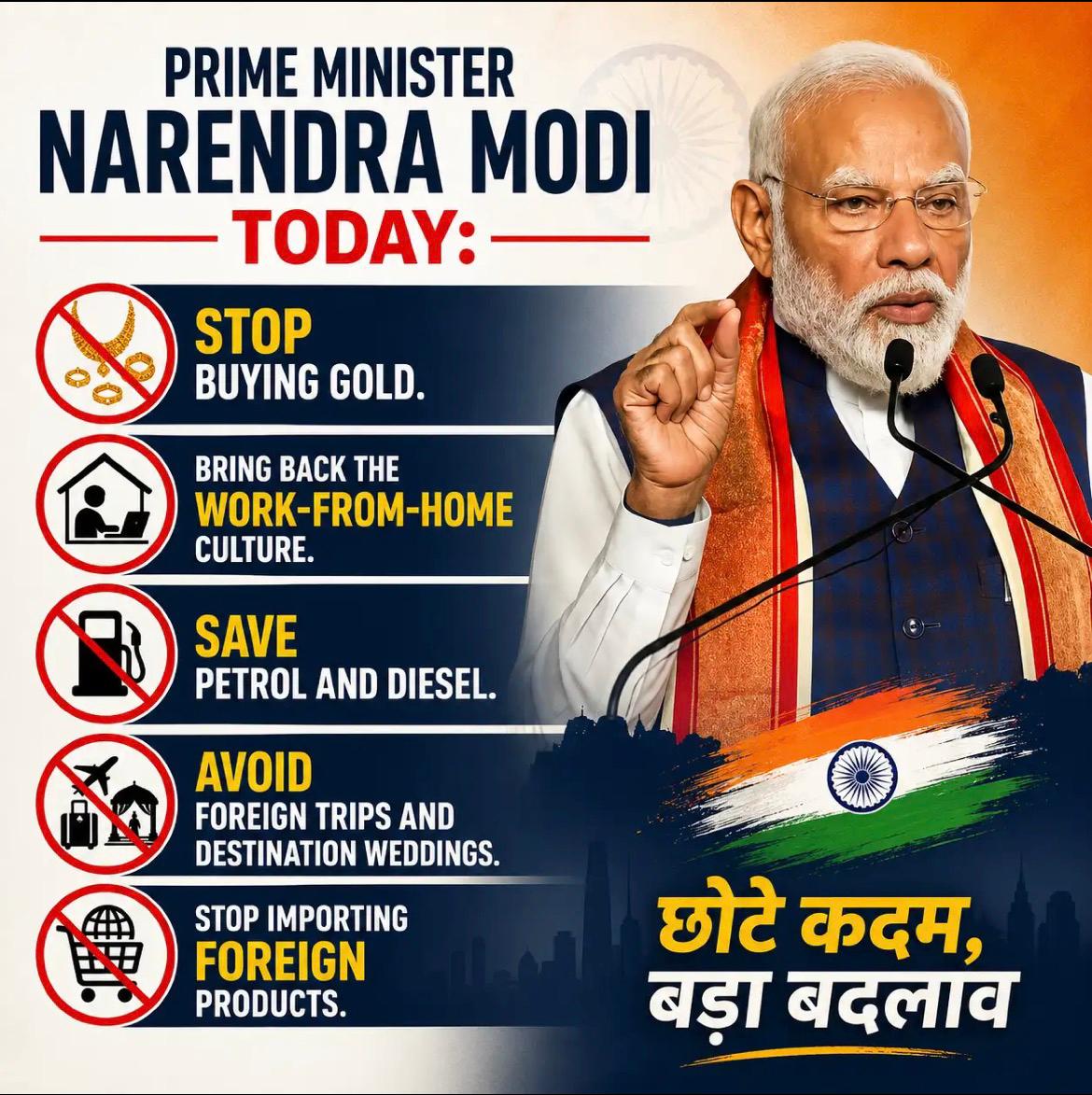
- The ongoing conflict involving Iran, Israel, and the United States has triggered serious geopolitical and economic concerns across the world. In this backdrop, Prime Minister Narendra Modi recently appealed to Indian citizens to adopt austerity measures such as Work From Home (WFH), reduced foreign travel, lower fuel consumption, and responsible spending habits. The statement reflects India’s growing concern over rising global oil prices and disruptions in energy supply chains caused by instability in West Asia.
- The Prime Minister’s appeal is significant because India remains one of the world’s largest energy importers and is highly vulnerable to fluctuations in crude oil prices.
Background of the Crisis
- The crisis emerged due to the continuing conflict involving Iran in West Asia. A major concern has been the disruption around the Strait of Hormuz, a strategically important maritime chokepoint through which nearly one-fifth of global oil trade passes.
- With the Strait facing prolonged disruption, global crude prices have surged sharply, directly impacting oil-importing countries like India.
- India imports nearly 90% of its crude oil requirements, making the economy highly sensitive to geopolitical instability in the Middle East.
Why Modi’s Appeal is Important
- Prime Minister Modi’s recommendations resemble the discipline and austerity measures seen during the COVID-19 pandemic. However, this time the focus is on:
- Conserving fuel
- Reducing import dependence
- Saving foreign exchange reserves
- Maintaining macroeconomic stability
- Promoting responsible consumption
His suggestions included:
- Reviving Work From Home culture
- Using public transport and metro systems
- Encouraging carpooling
- Reducing unnecessary foreign travel
- Advising farmers to optimize fertilizer usage
- The statement highlights the government’s attempt to prepare society psychologically and economically for a prolonged global energy crisis.
Impact of Rising Oil Prices on India
1. Inflationary Pressure
Higher crude oil prices increase transportation and manufacturing costs, leading to inflation in:
- Food prices
- Fuel prices
- Essential commodities
This negatively affects household consumption and purchasing power.
2. Pressure on Current Account Deficit (CAD)
- India’s oil import bill rises significantly during global price shocks. This widens the Current Account Deficit and increases pressure on the Indian Rupee.
- A weaker rupee further makes imports expensive, creating a vicious cycle.
3. Impact on Fiscal Stability
The government may face pressure to:
- Reduce fuel taxes
- Increase subsidies
- Support vulnerable sectors
This can strain fiscal resources and affect developmental expenditure.
4. Impact on Stock Markets
- Following the Prime Minister’s remarks, Indian stock markets witnessed volatility, with the benchmark BSE Sensex reportedly falling sharply amid fears of prolonged economic uncertainty.
Strategic Importance of the Strait of Hormuz
The Strait of Hormuz is one of the most critical maritime chokepoints in the world.
Key Facts:
- Connects the Persian Gulf with the Gulf of Oman and Arabian Sea
- Major oil exporters like:
- Saudi Arabia
- Iraq
- UAE
- Kuwait
rely heavily on this route
- A large portion of India’s crude imports passes through this region
Any prolonged disruption can:
- Increase shipping costs
- Affect energy supplies
- Trigger global recessionary trends
India’s Energy Security Challenges
Heavy Import Dependence
India imports:
- Crude Oil
- LNG
- Fertilizers
This creates vulnerability during geopolitical conflicts.
Limited Strategic Petroleum Reserves
- Although India has developed Strategic Petroleum Reserves (SPRs), their capacity remains limited compared to major powers.
Fertilizer Dependency
- India depends on imports for key fertilizer inputs. Global disruptions raise agricultural costs and impact food security.
Government’s Possible Responses
1. Diversification of Energy Sources
India may accelerate:
- Renewable energy expansion
- Green hydrogen mission
- Solar and wind capacity
2. Strategic Petroleum Reserves Expansion
Increasing crude storage capacity can help India manage temporary supply shocks.
3. Strengthening Domestic Manufacturing
Reducing dependence on imports through:
- Make in India
- Energy-efficient industries
- Indigenous technology
4. Promoting Public Transport
Greater investment in:
- Metro systems
- Electric mobility
- Railways
can reduce oil dependency.
Ethical and Civic Dimension
Prime Minister Modi linked patriotism with responsible civic behavior during economic crises. This reflects the broader concept of:
- Economic nationalism
- Collective responsibility
- Sustainable consumption
The appeal attempts to transform citizens into active stakeholders in national resilience.
Criticism and Concerns
Some economists argue that:
- WFH may affect productivity in certain sectors
- Reduced consumption can slow economic growth
- Austerity messaging may create panic in markets
Others believe that long-term structural reforms are more important than temporary behavioral adjustments.
Way Forward
India must adopt a balanced approach combining:
- Energy diversification
- Diplomatic engagement in West Asia
- Economic resilience
- Sustainable consumption practices
- At the same time, strengthening renewable energy infrastructure and reducing import dependency should remain long-term priorities.
Conclusion
- Prime Minister Modi’s appeal reflects the seriousness of the global energy crisis triggered by the ongoing Iran conflict. The situation highlights India’s vulnerability to external geopolitical shocks and underscores the urgent need for energy security, economic resilience, and responsible citizenship.
- The crisis also serves as a reminder that in an interconnected world, geopolitical tensions can rapidly translate into economic challenges for developing countries like India. Therefore, India’s future strategy must focus on self-reliance, sustainability, and strategic preparedness.
UPSC CSE Relevance
Prelims
- Key terms: Strait of Hormuz, Current Account Deficit, Strategic Petroleum Reserves, Economic Nationalism
- Facts: India imports >85% crude oil; Hormuz handles ~20% global oil trade
GS-3 (Economy)
- Impact of global geopolitical shocks on inflation, CAD, fiscal health, and energy security.
GS-2 (IR)
- West Asia conflict and its implications for India’s foreign and energy policy.
Essay / Interview
- “Geopolitics and Economic Resilience: Managing Global Energy Shocks in an Interconnected World”
- “Economic Nationalism in Times of Crisis: The Role of Responsible Citizenship.”
MCQs (Prelims Standard)
Q1.The Strait of Hormuz is strategically important because it handles approximately what percentage of global oil trade?
(a) 10%
(b) 20%
(c) 30%
(d) 40%
Answer:
(b) 20%
Q2.With reference to India’s energy security, consider the following statements:
- India imports over 85% of its crude oil requirements.
- Rising global oil prices can widen the Current Account Deficit.
Which of the statements given above is/are correct?
(a) 1 only
(b) 2 only
(c) Both 1 and 2
(d) Neither 1 nor 2
Answer:
(c) Both 1 and 2
Q3.Which of the following was NOT part of Prime Minister Narendra Modi’s recent appeal?
(a) Work From Home
(b) Reduced foreign travel
(c) Increased fertiliser usage
(d) Responsible spending habits
Answer:
(c) Increased fertiliser usage
Q4.The Prime Minister’s appeal was primarily aimed at:
(a) Increasing oil imports
(b) Conserving fuel and reducing import dependence
(c) Promoting foreign travel
(d) Reducing public transport usage
Answer:
(b) Conserving fuel and reducing import dependence
Mains Questions
- “Geopolitical tensions in West Asia pose serious challenges to India’s energy security and macroeconomic stability.” Discuss the impact of rising oil prices and the significance of PM Modi’s austerity appeal. (15 marks / 250 words)
- Examine the vulnerabilities in India’s energy import dependence and suggest long-term measures for achieving energy resilience. (10 marks / 150 words)
- “Economic nationalism and responsible citizenship are crucial during global crises.” Analyse this statement in the context of India’s response to the Iran conflict. (15 marks / 250 words)
- Essay (250 marks) “From Global Shocks to National Resilience: India’s Energy Security Strategy in an Uncertain World.”

