5th March Current Affairs
Why in News?
- On March 1–2, 2026, Assam flagged off its first export consignment of GI-tagged Karbi Anglong Ginger to London from Guwahati, marking a significant milestone for the state’s agricultural sector. The trial shipment of approximately 1–2 metric tonnes was facilitated by APEDA in collaboration with the Assam Agriculture Department.
- The export represents a major breakthrough for farmers in Karbi Anglong, particularly in tribal and hilly regions, by connecting them to international markets. The initiative follows global buyer interest generated earlier in 2026 and aligns with India’s broader push for value-added agricultural exports under self-reliance and “Local to Global” initiatives.
- This development underscores the growing global recognition of Assam’s unique agro-products and reflects efforts to enhance farmer incomes through branding, quality certification, and export diversification.
Regional Patterns:
- Karbi Anglong: Hilly terrain, organic/low-input farming → high-quality output.
- Assam Overall: Among top ginger-producing states; focus shifting to GI-tagged premium varieties.
- International: UK/Europe demand for aromatic, high-value spices; potential for sustained exports.
Unique Properties & Significance of Karbi Anglong Ginger
- Aromatic & Flavour Profile
- One of India’s most aromatic & flavourful ginger varieties.
- Bold pungency + rich essential oil content → intense, earthy-spicy taste ideal for premium culinary use.
- Medicinal Value
- Traditional use in Karbi tribal medicine; high gingerol & shogaol content → anti-inflammatory, digestive, & immunity-boosting properties.
- Cultivation Practices
- Grown under Jhum (slash-and-burn) & Tila (hill farming) systems → low chemical input, near-organic quality.
- Hilly micro-climate (altitude, rainfall, soil) contributes to distinct biochemical profile.
- GI Tag Importance
- Granted in 2015 under Geographical Indications of Goods (Registration and Protection) Act, 1999.
- Protects origin-linked reputation; prevents misuse of name; valid for 10 years (renewable).
- Economic & Social Impact
- Cash crop for tribal farmers in Karbi Anglong; export premium → higher income vs. domestic sale.
- Aligns with Assam govt’s focus on GI products (e.g., Joha rice, Muga silk) for global branding.
Long-term Socio-economic & Strategic Consequences
- Farmer Income & Livelihood
- Direct export linkage → better price realization; reduces middlemen dependence.
- Potential for 20–50% income rise for participating farmers.
- Agri-Export Boost
- Strengthens India’s spice export basket (~$4 billion annually); Assam emerges as premium ginger hub.
- Supports ₹1 lakh crore agri-export target by 2030.
- GI Ecosystem Growth
- Encourages more Assam products for GI (e.g., Kachai lemon, Tezpur litchi); builds brand equity.
- Sustainability & Tribal Empowerment
- Promotes traditional low-input farming; preserves Karbi cultural heritage.
- Women & tribal youth benefit from value-chain participation.
- Global Market Positioning
- Positions Indian GI spices against competitors (e.g., Jamaican ginger); potential for sustained UK/EU market access.
Policy Challenges & Suggested Reforms
- Scale Exports: APEDA to facilitate regular shipments; explore air/sea cold-chain logistics.
- Strengthen FPOs: Farmer Producer Organizations in Karbi Anglong for aggregation & quality control.
- GI Enforcement: Prevent misuse; promote GI branding in international markets.
- R&D Support: ICAR & AAU to develop high-yielding, disease-resistant varieties.
- Market Linkages: Regular buyer-seller meets; e-commerce tie-ups for premium segments.
- Sustainability: Promote organic certification; integrate with Assam Organic Mission.
Prelims
- GI Tag Act, 1999; APEDA role; Jhum cultivation.
GS-1 (Society)
- Tribal economy; cultural significance of Karbi Anglong.
GS-2 (Governance)
- GI protection; agri-export policy; centre-state coordination.
GS-3 (Economy & Agriculture)
- Agri-exports; value addition; GI products & farmer income.
Essay / Interview
- “GI Tags: From Local Pride to Global Markets – The Karbi Anglong Ginger Success Story.”
- Karbi Anglong Ginger received its GI tag in:
(a) 2010
(b) 2015
(c) 2018
(d) 2020
Answer: (b)
- The first export consignment of GI-tagged Karbi Anglong Ginger to London was flagged off by:
(a) CM Himanta Biswa Sarma
(b) Agriculture Minister Atul Bora
(c) Union Commerce Minister
(d) APEDA Chairman
Answer: (b)
- Karbi Anglong Ginger is primarily cultivated using which traditional methods?
(a) Terrace & wetland
(b) Jhum & Tila
(c) Greenhouse hydroponics
(d) Monoculture plantation
Answer: (b)
- Which body facilitated the maiden export of Karbi Anglong Ginger to London?
(a) Spices Board
(b) APEDA
(c) FSSAI
(d) NAFED
Answer: (b)
- “GI-tagged Karbi Anglong Ginger’s export to London exemplifies the potential of geographical indications in transforming tribal economies.” Discuss the significance and suggest ways to scale such initiatives. (15 marks / 250 words)
- Analyse the role of APEDA and state governments in promoting GI products for international markets. (10 marks / 150 words)
- “From Jhum fields to global shelves: Challenges and opportunities in value addition for Assam’s agri-produce.” Critically evaluate in light of the Karbi Anglong Ginger export. (15 marks / 250 words)
- Essay (250 marks) “Geographical Indications as Engines of Rural Development and Global Competitiveness: The Case of Karbi Anglong Ginger.”
Why in News?
- In March 2026, a team of Indian herpetologists formally described and named a new species of Asian grass lizard — Takydromus ultapanensis — from the Ultapani Reserve Forest in Kokrajhar district, Assam, within the Manas Biosphere Reserve landscape.
- The discovery was published in the international journal Zootaxa (early 2026 issue) and widely reported in Indian media outlets (The Hindu, Down To Earth, Mongabay India, etc.).
- The species is currently known only from a single forest range, raising immediate conservation concerns. This find adds to the growing list of recently described reptiles from Northeast India and highlights the biodiversity value of Assam’s lowland forests, many of which remain poorly surveyed.
Regional Context:
- Manas Biosphere Reserve (UNESCO World Heritage site) → one of India’s richest lowland biodiversity hotspots.
- Kokrajhar – Ultapani belt → transitional zone between Himalayan foothills and Brahmaputra plains; under-sampled for herpetofauna.
Taxonomic & Ecological Significance
- Genus Takydromus
- Asian grass lizards (family Lacertidae); ~30 species, mostly East & Southeast Asia.
- Characterised by extremely long tails, slender bodies, grassland/edge-dwelling habits.
- Unique Habitat
- Unlike montane/subtropical species (T. sikkimensis, T. khasiensis), T. ultapanensis inhabits lowland, humid, waterlogged grasslands with fern undergrowth.
- Represents an ecological outlier within the genus.
- Morphological Differentiation
- Higher number of dorsal scales, distinct ventral scale counts.
- Longer relative tail length, diagnostic head scale arrangement, subtle colour pattern differences (pale dorsum with dark lateral stripe).
- Conservation Red Flag
- Known from only one forest range → extremely restricted range.
- Vulnerable to habitat loss (encroachment, agriculture, infrastructure), fire, invasive species, and climate-induced changes in grassland ecology.
- Broader Biodiversity Context
- Northeast India → global hotspot for reptile endemism.
- Recent decade: multiple new lizards, snakes, geckos described from Assam, Arunachal, Meghalaya.
Long-term Conservation & Scientific Consequences
- Immediate Threat
- Single-locality endemism → high extinction risk even from localised disturbances.
- Manas landscape faces pressures from human-wildlife conflict, illegal logging, and proposed linear infrastructure.
- Research Gaps
- Population size, density, reproductive biology, diet unknown.
- Genetic studies needed to confirm divergence and phylogeographic position.
- Conservation Opportunities
- Inclusion in Protected Area network planning.
- Flagship species for grassland conservation in Manas landscape.
- Potential for community-based monitoring involving Bodo & other local communities.
- Policy & Scientific Implications
- Reinforces need for comprehensive herpetofaunal surveys in Assam’s reserve forests.
- Strengthens case for strict protection of lowland grassland-forest mosaics.
Policy Challenges & Suggested Reforms
- Urgent Survey & Monitoring — Multi-year population & distribution survey across Manas landscape.
- Habitat Protection — Prevent conversion of grassland-fern patches; regulate fire & grazing.
- Incorporate into Management Plans — Update Manas Tiger Reserve / Biosphere Reserve management plan.
- Community Engagement — Involve local communities in awareness and monitoring.
- Taxonomic & Genetic Research — DNA barcoding, phylogenetics to understand evolutionary history.
- IUCN Red List Assessment — Fast-track evaluation (likely Critically Endangered or Endangered).
- Avoid Over-tourism — Regulate any future eco-tourism to prevent disturbance.
Prelims
- Biodiversity hotspots, Manas Biosphere Reserve, GI / endemic species.
- Lacertidae family, grass lizards.
GS-1 (Geography & Society)
- Northeast India biodiversity, lowland grassland ecosystems.
GS-3 (Environment & Ecology)
- New species discovery, single-site endemism, conservation of cryptic reptiles.
- Manas Biosphere Reserve management.
Essay / Interview
- “Hidden Biodiversity of Northeast India: Lessons from the Discovery of Takydromus ultapanensis.”
- Takydromus ultapanensis was recently discovered in which Indian state?
(a) Arunachal Pradesh
(b) Assam
(c) Meghalaya
(d) Nagaland
Answer: (b)
- The new species is named after which location?
(a) Manas River
(b) Ultapani Reserve Forest
(c) Khasi Hills
(d) Namdapha
Answer: (b)
- Unlike many congeners, Takydromus ultapanensis inhabits:
(a) High-altitude montane forests
(b) Lowland semi-evergreen forests with waterlogged grasslands
(c) Desert scrub
(d) Mangrove swamps
Answer: (b)
- The new lizard species is currently known only from:
(a) Multiple states
(b) A single forest range
(c) Two protected areas
(d) International border region
Answer: (b)
- “The discovery of Takydromus ultapanensis underscores both the richness and fragility of Northeast India’s herpetofauna.” Discuss the ecological and conservation significance of this find. (15 marks / 250 words)
- Analyse the challenges in protecting single-locality endemic species in biodiversity-rich but pressure-prone landscapes like Manas. (10 marks / 150 words)
- “Lowland grassland-forest mosaics remain among India’s most neglected ecosystems.” Critically evaluate in light of recent reptile discoveries in Assam. (15 marks / 250 words)
- Essay (250 marks) “Unseen Biodiversity: New Species Discoveries and the Urgent Imperative of Habitat Protection in Northeast India.”
Why in News?
Detailed analysis of NFHS-5 (2019–21) data combined with recent projections from the United Nations Population Division (2024 Revision), NITI Aayog, and academic studies (Lokniti-CSDS, IIPS Mumbai) has confirmed that India has quietly crossed into the low-fertility regime.
- National Total Fertility Rate (TFR) now stands at 1.91 (NFHS-5), already below the replacement level of 2.1.
- 22 states and union territories have TFR below replacement level.
- Southern states (Andhra Pradesh 1.5, Tamil Nadu 1.6, Kerala 1.6) and parts of western India are experiencing very low fertility (TFR <1.6 in many districts).
- Northern states like Bihar (3.0) and Uttar Pradesh (2.4) are still above replacement but declining rapidly.
This “quiet demographic revolution” — happening without aggressive policy push — is now being called India’s second silent transition (after the fertility decline of the 1990s–2010s). Scholars describe it as one of the fastest fertility transitions in human history for a country of India’s size.
Regional Bunching (Clustering):
- South + West + East: TFR 1.5–1.7 → population stabilisation or decline by 2040–45.
- North-central belt: TFR 2.0–3.0 → still growing but converging downward rapidly.
- North-east: Mixed but generally low (1.6–2.2).
Drivers of Rapid Fertility Decline (Detailed Explanation)
- Female Education & Literacy Surge
- Female literacy rose from 65.5% (NFHS-4) to 71.5% (NFHS-5).
- Women with 12+ years of schooling have TFR ~1.4–1.5 (vs 2.8 for no schooling).
- Urbanisation & Nuclear Families
- Urban TFR = 1.6; rural = 2.1.
- Urban middle-class prefers 1–2 children due to high cost of living, education, and housing.
- Women’s Workforce Participation
- Rising female labour force participation (especially in services & self-employment) delays marriage and childbirth.
- Delayed Marriage & First Birth
- Median age at first marriage for women increased to 22.1 years (NFHS-5).
- Average age at first birth now ~23–24 years in urban areas.
- Family Planning Success
- Modern contraceptive prevalence rate (mCPR) rose to 56.5% (NFHS-5).
- Female sterilisation remains dominant (37.9%), but spacing methods (pills, IUD, condoms) increasing.
- Economic Pressures
- Cost of raising a child in urban India (education + healthcare) now exceeds ₹1–1.5 crore till age 22.
- Dual-income families prefer quality over quantity.
- Social & Cultural Shift
- Preference for small families, girl child education, and nuclear setups.
- Media, cinema, and peer influence reinforce “one or two is enough” norm.
Long-term Demographic & Socio-economic Consequences
- End of Demographic Dividend Window
- Peak working-age population (15–59 years) expected around 2041–2047.
- After that, dependency ratio rises sharply → old-age dependency ratio from 10.1 (2021) to 24–28 by 2050.
- Ageing Population Challenge
- By 2050, India will have ~300 million people aged 60+ (more than current population of USA).
- Pension & healthcare burden will explode (current pension coverage <15%).
- Labour Force Shrinkage
- Southern states already facing acute labour shortages (construction, IT, nursing).
- Migration from north to south will increase → social & political tensions possible.
- North–South Political Imbalance
- Post-2026 delimitation (likely after 2031 Census), Lok Sabha seats will shift northwards (UP, Bihar gain; TN, Kerala, Andhra lose).
- Southern states fear loss of political power despite better development.
- Gender & Social Dynamics
- Continued son preference in low-fertility states → sex ratio at birth still skewed in some areas (Haryana, UP).
- Smaller families → better investment in girls’ education & health.
Policy Challenges & Suggested Reforms
- Prepare for Ageing: Universal pension coverage, geriatric healthcare, old-age homes, reverse mortgage schemes.
- Boost Female Workforce: Creche facilities, flexible work, skill training for women.
- Address Regional Imbalance: Reform Finance Commission formula (reduce population weightage); promote industrialisation in low-fertility states.
- Immigration & Skilling: Controlled internal migration + international skilled labour (if needed).
- Pro-natal Policies?: Targeted incentives in very low-fertility states (childcare subsidy, maternity benefits, tax breaks) — but avoid coercive measures.
Prelims
- Total Fertility Rate (TFR) & replacement level (2.1)
- NFHS-5 key finding: National TFR = 1.91
- Demographic Dividend window: ~2025–2040
- Old-age dependency ratio projections
GS-1 (Society & Geography)
- Demographic transition & regional variations
- North–South divide in fertility & population
GS-2 (Polity & Governance)
- Delimitation after 2031 Census → political power shift
- Social security & pension reforms
GS-3 (Economy)
- Shrinking labour force & economic growth
- Ageing population & fiscal burden
Essay / Interview
- “India’s silent demographic transition: From population bomb to ageing society.”
- “Low fertility in India: Dividend or demographic disaster?”
1. According to NFHS-5 (2019–21), India’s national Total Fertility Rate (TFR) stands at:
(a) 1.6
(b) 1.91
(c) 2.1
(d) 2.4
Answer: (b)
2. Replacement level fertility rate is internationally accepted as:
(a) 1.8
(b) 2.0
(c) 2.1
(d) 2.5
Answer: (c)
3. Which state has the lowest TFR as per NFHS-5?
(a) Bihar
(b) Uttar Pradesh
(c) Andhra Pradesh
(d) Rajasthan
Answer: (c)
4. By 2050, India’s old-age dependency ratio is projected to be in which range?
(a) 10–15
(b) 20–28
(c) 30–35
(d) 40–45
Answer: (b)
1. “India is quietly entering the low-fertility regime, with profound long-term implications for economy, society and polity.” Discuss the drivers of this transition and suggest policy measures to prepare for an ageing population. (15 marks / 250 words)
2. Analyse the emerging north–south divide in fertility rates in India. How might this affect future political representation and resource allocation? (10 marks / 150 words)
3. “The demographic dividend window is closing faster than anticipated.” In light of recent fertility trends, critically evaluate India’s preparedness and recommend reforms. (15 marks / 250 words)
4. Essay (250 marks) “India’s Silent Demographic Revolution: From Population Explosion to Ageing Society – Challenges and Choices.”
Why in News?
- On March 4, 2026, a U.S. submarine torpedoed and sank the Iranian frigate IRIS Dena in international waters off the southern coast of Sri Lanka, marking a significant escalation in the ongoing West Asia conflict.
- This incident, occurring on the fifth day of heightened hostilities between the U.S., Israel, and Iran, represents the first sinking of an enemy vessel by torpedo since World War II. U.S. Defense Secretary Pete Hegseth confirmed the strike, emphasizing it as a "quiet death" and a demonstration of resolve in the conflict.
- The IRIS Dena was returning from India's International Fleet Review (IFR) 2026 in Visakhapatnam, where it had participated as part of a multinational maritime exercise. The attack resulted in 83 deaths and the rescue of 32 sailors, with Sri Lankan Navy and Coast Guard responding to the distress call. This event has brought the West Asia war closer to the Indian subcontinent, triggering oil market volatility, regional diplomatic concerns, and fears of broader escalation.
- This "maritime strike" is being analyzed as a pivotal moment in the U.S.-Iran tensions, rooted in Iran's missile and drone attacks on Israel, and highlights the vulnerability of international waters amid global conflicts. It underscores the intersection of geopolitics, energy security, and maritime law, with implications for India's strategic interests in the Indian Ocean Region (IOR).
Regional Context:
- The attack occurred in international waters, but proximity to Sri Lanka raised concerns about spillover into South Asia.
- No U.S. or allied ships were reported damaged; the strike was unilateral.
- Sri Lanka expressed "deep concern" over escalation and called for restraint.
Background and Drivers of the Escalation (Detailed Explanation)
- Ongoing West Asia Conflict
- The incident is part of the fifth day of war involving U.S. and Israeli strikes on Iranian targets, following Iran's missile barrages and drone attacks on Israel.
- Root causes include long-standing tensions over Iran's nuclear program, support for proxy groups (e.g., Hezbollah, Houthis), and regional dominance.
- U.S.-Iran Hostilities
- Escalation began with Israeli air defenses activated against Iranian missiles.
- U.S. involvement intensified after Iranian attacks on allied positions, leading to targeted strikes on Iranian assets.
- Maritime Dimension
- Iran's participation in IFR 2026 symbolized diplomatic outreach but exposed vulnerabilities in return voyages.
- The Indian Ocean serves as a key transit route for Iranian vessels, amid U.S. naval presence to secure shipping lanes.
- Geopolitical Pressures
- Closure threats to the Strait of Hormuz (a chokepoint for 20% of global oil) heightened energy security fears.
- U.S. strategy: Demonstrate military superiority and deter Iranian aggression without full-scale invasion.
- Role of International Events
- IFR 2026 in Visakhapatnam involved over 50 nations, promoting maritime cooperation; Iran's involvement was seen as a goodwill gesture but amid rising tensions.
- Technological and Tactical Factors
- Use of torpedo harks back to WWII tactics, signaling a shift from airstrikes to submarine warfare for stealth and deniability.
- Diplomatic Failures
- Failed negotiations on nuclear deals and sanctions relief contributed to the breakdown.
Long-term Demographic & Socio-economic Consequences
- Escalation of Global Tensions
- Potential for wider conflict involving allies (e.g., U.S.-Israel vs. Iran-Russia-China axis), risking World War III scenarios.
- Energy Security and Economic Impact
- Oil price volatility: Surge in crude prices could lead to inflation in import-dependent nations like India (imports 85% of oil).
- Global supply chain disruptions in the IOR, affecting trade routes.
- Maritime Security Challenges
- Increased naval patrols in the Indian Ocean; potential for incidents involving neutral ships.
- Strain on international maritime law (UNCLOS), with debates over "freedom of navigation" vs. "acts of war."
- Regional Power Shifts
- Strengthening of U.S. alliances (e.g., QUAD, AUKUS) in Indo-Pacific to counter Iran-China ties.
- South Asian nations like Sri Lanka and India may face pressure to align or remain neutral.
- Humanitarian and Diplomatic Fallout
- Loss of life amplifies calls for ceasefires; UN Security Council likely to convene.
- Migration and refugee crises if conflict spreads to Gulf states.
- India's Position
- Balancing relations with U.S., Iran (key oil supplier), and Israel (defense partner); potential impact on Indian diaspora in Gulf.
Policy Challenges & Suggested Reforms
- Enhance Maritime Security: Strengthen Indian Navy's presence in IOR through exercises like Malabar; invest in anti-submarine warfare capabilities.
- Energy Diversification: Accelerate shift to renewables and diversify oil imports (e.g., from Russia, Saudi Arabia) to mitigate Strait of Hormuz risks.
- Diplomatic Initiatives: India to lead de-escalation efforts via forums like UN, SCO, and BRICS; promote dialogue between conflicting parties.
- Economic Safeguards: RBI to monitor forex reserves; government to hedge oil prices and support affected sectors (e.g., aviation, transport).
- Humanitarian Aid: Coordinate with Sri Lanka for relief; prepare for potential refugee influx from West Asia.
- Avoid Entanglement: Maintain strategic autonomy; reject basing requests from belligerents.
Prelims
- Key Terms: Torpedo warfare, International Fleet Review (IFR), Strait of Hormuz, UNCLOS.
- Facts: First torpedo sinking since WWII; IRIS Dena (Moudge-class frigate).
- Geography: Indian Ocean Region (IOR), Galle (Sri Lanka).
GS-1 (Society & Geography)
- Impact on global migration and diaspora.
- Geopolitical significance of IOR.
GS-2 (Polity & Governance)
- India's foreign policy: Strategic autonomy, multi-alignment.
- Role of UNSC in conflict resolution; maritime disputes.
GS-3 (Economy & Security)
- Energy security and oil imports.
- Defense: Submarine warfare, naval modernization.
- Internal Security: Potential terrorism spillover.
Essay / Interview
- “Escalating Conflicts in West Asia: Implications for India's Security and Economy.”
- “Maritime Security in the Indo-Pacific: Lessons from the US-Iran Incident.”
- The IRIS Dena, sunk by a U.S. submarine in March 2026, belongs to which class of Iranian frigates? (
(a) Jamaran
(b) Moudge
(c) Sahand
(d) Damavand
Answer: (b)
- The incident marked the first sinking of an enemy vessel by torpedo since which historical event?
(a) World War I
(b) Korean War
(c) World War II
(d) Vietnam War
Answer: (c)
- The distress call from IRIS Dena was received by which country's Navy?
(a) India
(b) U.S.
(c) Iran
(d) Sri Lanka
Answer: (d)
- The attack on IRIS Dena occurred approximately how many nautical miles off the coast of Galle, Sri Lanka?
(a) 20
(b) 40
(c) 60
(d) 80
Answer: (b)
- “The sinking of an Iranian vessel near Sri Lanka underscores the fragility of global maritime security.” Discuss the geopolitical drivers of this incident and its implications for India's foreign policy. (15 marks / 250 words)
- Analyse the economic repercussions of the US-Iran conflict escalation on energy-dependent economies like India. Suggest measures to enhance India's energy security. (10 marks / 150 words)
- “From West Asia to the Indian Ocean: The spillover of conflicts in a multipolar world.” Critically examine India's strategic responses to such incidents and recommend reforms in defense and diplomacy. (15 marks / 250 words)
- Essay (250 marks) “Escalating Tensions in West Asia: Maritime Dimensions and India's Role in Global Stability.”
Why in News?
- The escalating conflict in West Asia, triggered by the U.S. torpedo strike on the Iranian frigate IRIS Dena on March 4, 2026, has led to severe disruptions in propane and natural gas supplies from Gulf countries. This has brought Gujarat's Morbi ceramic industry—India's largest ceramic manufacturing cluster—to the brink of shutdown.
- As of March 5, 2026, industry leaders report stocks lasting only 3-4 days for propane and about a week for natural gas, amid halted shipments through the Strait of Hormuz and production halts in Qatar. Morbi, accounting for 80-90% of India's ceramic production (valued at over ₹50,000 crore annually), employs around 4 lakh workers and exports to over 150 countries.
- The crisis highlights India's vulnerability to global energy supply chains, with potential ripple effects on manufacturing, employment, and exports. Statements from the Morbi Ceramic Manufacturers Association (MCMA) President Manoj Arvadiya underscore the existential threat: "If gas supply is not adequate, the entire Morbi ceramic industry will have to shut down."
- This incident amplifies broader concerns over energy security amid geopolitical tensions, intersecting with India's import dependence (85% of oil and gas from West Asia) and the need for diversified supply chains.
Regional Context:
- Morbi's kilns require continuous high-temperature operation (1,000-1,200°C), making fuel interruptions catastrophic.
- No immediate alternative fuels viable at scale (e.g., coal or electricity too costly/inefficient).
- Linked to Qatar's halt in LNG production and Iran's threats to close the Strait of Hormuz.
Background and Drivers of the Crisis (Detailed Explanation)
- Escalating West Asia Conflict
- Rooted in U.S.-Iran tensions, including the March 4 sinking of IRIS Dena, leading to missile exchanges and naval blockades.
- Iran's control over Strait of Hormuz (20% of global oil transit) and Qatar's production halt amid safety concerns.
- India's Energy Import Dependence
- India imports 85% of crude oil and 50% of natural gas from West Asia; propane/LPG imports rose 15% in 2025 to meet industrial demand.
- Morbi's shift to gas-based fuels in the 2010s for cleaner, efficient production (post-Gujarat's gas grid expansion).
- Supply Chain Vulnerabilities
- Sea route disruptions: Houthi attacks in Red Sea and new threats in Indian Ocean escalate shipping insurance and delays.
- Qatar (world's largest LNG exporter) shutters terminals; Saudi/UAE reroute supplies, prioritizing domestic needs.
- Industry-Specific Factors
- Ceramic production: Relies on gas for firing kilns and drying; propane preferred for its high energy density and low emissions.
- Growth trajectory: Morbi's output tripled since 2010, driven by exports, but without domestic fuel backups.
- Geopolitical and Economic Pressures
- U.S. sanctions on Iran exacerbate shortages; global oil prices surge 10-15% in a day, inflating import costs.
- Failed diversification: Despite initiatives like Russia-India energy corridor, West Asia remains dominant (60% share).
- Domestic Triggers
- Gujarat Gas's 50% supply cut to industries to prioritize households; no buffer stocks in Morbi units due to just-in-time inventory.
- Historical Parallels
- Similar to 2022 Ukraine crisis impacts on fertilizer imports; underscores need for strategic reserves.
Long-term Socio-economic Consequences
- Industrial Shutdown and Economic Losses
- Short-term: ₹1,000-2,000 crore monthly production loss; export contracts defaulted, eroding market share to China/Vietnam.
- Long-term: Supply chain shifts; potential relocation of units to gas-rich states like Assam.
- Employment and Social Impact
- Mass layoffs: 4 lakh affected, leading to reverse migration to rural areas and increased NREGA demand.
- Gender dynamics: Women (30% workforce) hit hardest in informal sectors.
- Energy Security Risks
- Broader manufacturing vulnerability: Affects glass, steel, chemicals in Gujarat (India's industrial hub).
- Inflation spike: Ceramic prices up 20-30%, impacting construction sector (real estate slowdown).
- Geopolitical Ramifications
- Strains India-U.S. ties if conflict prolongs; boosts Russia/China as alternative suppliers.
- Environmental irony: Shift back to coal could reverse India's net-zero goals.
- Global Trade Disruptions
- India's ceramic exports (10% global share) decline; opportunities for competitors.
- Diaspora impact: 10 million Indians in Gulf face job risks if conflict escalates.
Policy Challenges & Suggested Reforms
- Build Strategic Reserves: Mandate 30-60 day fuel stocks for critical industries; expand SPR (Strategic Petroleum Reserve) to include LPG/propane.
- Diversify Energy Imports: Accelerate pipelines/deals with Russia (via INSTC), Australia, U.S.; promote domestic gas production (e.g., KG Basin).
- Promote Alternatives: Subsidize transition to renewables (solar kilns) or biofuels; R&D for electric kilns under Atmanirbhar Bharat.
- Industrial Support: Emergency credit lines via SIDBI; wage support for workers; export incentives to mitigate losses.
- Diplomatic Efforts: Engage UN/QUAD for de-escalation; bilateral talks with GCC for priority supplies.
- Regulatory Reforms: Reduce GST on ceramics; integrate Morbi into GIFT City's energy trading hub for hedging.
- Avoid Overdependence: Policy shift from 'Make in India' to resilient supply chains; insurance for geopolitical risks.
Prelims
- Key Terms: Strait of Hormuz, GCC Countries, Propane vs. Natural Gas, Morbi Ceramic Cluster.
- Facts: India's ceramic production share (80-90%); Daily fuel consumption in Morbi.
- Geography: Energy chokepoints (Strait of Hormuz, Red Sea).
GS-1 (Society & Geography)
- Industrial clusters and regional disparities (Gujarat's role).
- Impact on labor migration and urbanization.
GS-2 (Polity & Governance)
- Energy diplomacy: India's multi-alignment with U.S., Iran, GCC.
- Federalism: Centre-state coordination for crisis management.
GS-3 (Economy & Security)
- Energy security and import dependence.
- Industrial policy: Supply chain resilience, MSME support.
- Internal Security: Potential unrest from job losses.
Essay / Interview
- “Geopolitical Conflicts and India's Energy Vulnerability: Lessons from the Morbi Crisis.”
- “From West Asia to Western India: How Global Tensions Threaten Local Economies.”
- Morbi ceramic cluster in Gujarat accounts for approximately what percentage of India's total ceramic production? (a) 50-60% (b) 60-70% (c) 70-80% (d) 80-90% Answer: (d)
- The primary fuel used by a majority of ceramic units in Morbi is: (a) Coal (b) Electricity (c) Propane (d) Diesel Answer: (c)
- Which chokepoint is critical for India's oil and gas imports from West Asia, disrupted in the ongoing conflict? (a) Malacca Strait (b) Strait of Hormuz (c) Bab-el-Mandeb (d) Suez Canal Answer: (b)
- As per industry estimates, how many workers are indirectly dependent on Morbi's ceramic industry? (a) 1 lakh (b) 2 lakh (c) 3 lakh (d) 4 lakh Answer: (d)
- “The Morbi ceramic crisis illustrates the perils of overdependence on imported energy amid geopolitical instability.” Discuss the causes and suggest measures to enhance India's energy security. (15 marks / 250 words)
- Analyse the socio-economic impact of fuel shortages on industrial clusters like Morbi. How can policy interventions mitigate such vulnerabilities? (10 marks / 150 words)
- “Global conflicts have local consequences: From West Asia to Gujarat.” Critically evaluate India's preparedness for supply chain disruptions and recommend reforms for resilient manufacturing. (15 marks / 250 words)
- Essay (250 marks) “Energy Security in a Multipolar World: India's Challenges and Strategies Amid the West Asia Crisis.”
Why in News? 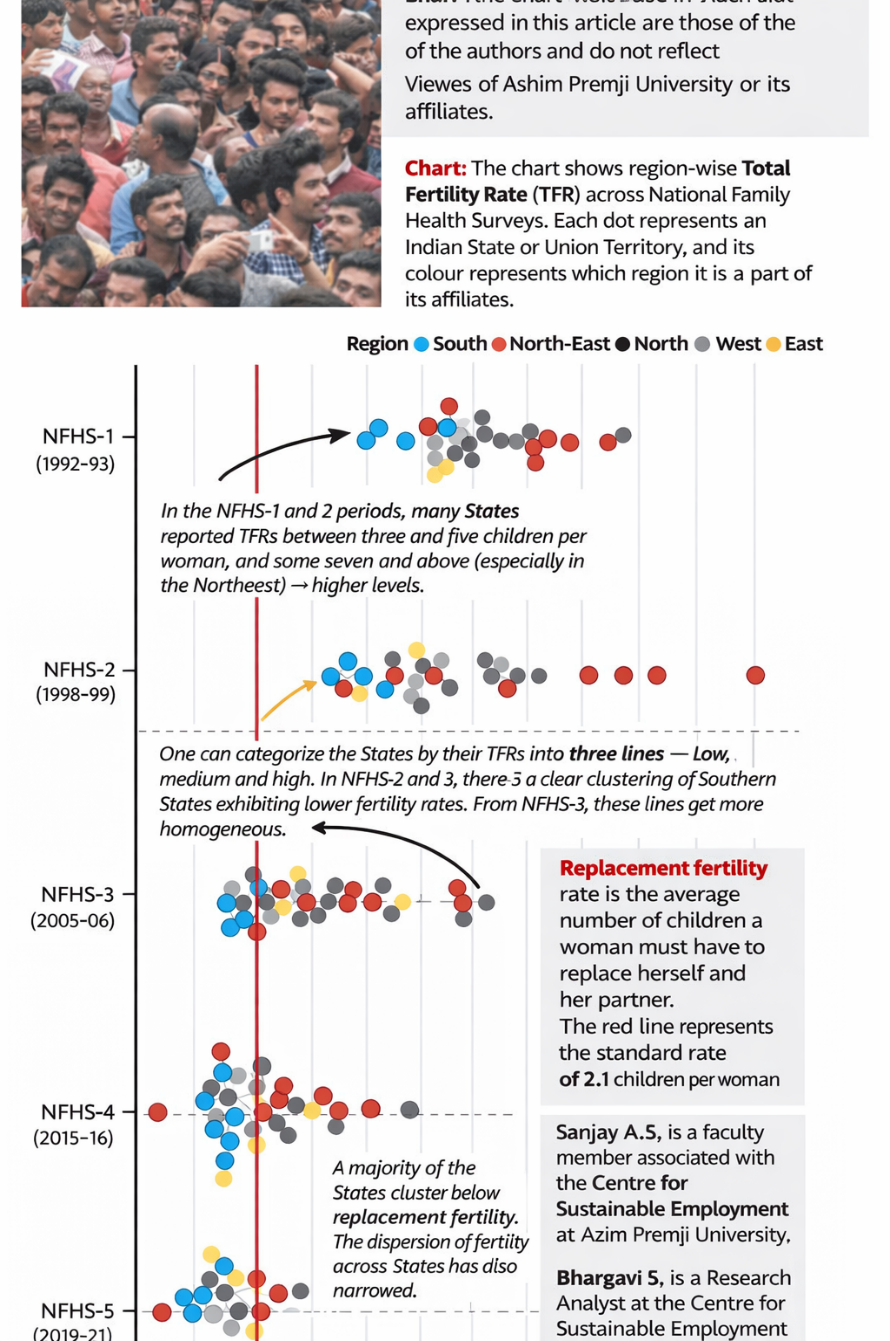
The World Obesity Atlas 2026, released by the World Obesity Federation on World Obesity Day (March 4, 2026), has highlighted a alarming surge in childhood obesity worldwide, with India ranking second globally in the absolute number of children aged 5–19 living with overweight or obesity (high BMI), trailing only China and surpassing the United States.
- In India (2025 estimates): 41 million children aged 5–19 have high BMI (including 14 million with obesity alone).
- Breakdown: ~14.9 million children aged 5–9 years and ~26.4 million aged 10–19 years are overweight or obese.
- Globally: Over one in five (20.7%) children aged 5–19 live with overweight or obesity (up from 14.6% in 2010); projected to reach 507 million by 2040.
- The report warns that the world is "failing" to meet the WHO target to halt the rise in childhood obesity (originally 2025, extended to 2030), with most countries, including India, off track.
- India faces projected increases in obesity-linked diseases: hypertension from 2.99 million to 4.21 million, hyperglycaemia from 1.39 million to 1.91 million, and high triglycerides from 4.39 million to 6.07 million by 2040.
This "silent emergency" underscores the double burden of malnutrition in India (undernutrition coexisting with rising overnutrition) and calls for urgent policy action on prevention, nutrition, and lifestyle interventions.
- Global projection (2040): 228 million children expected to live with obesity (prevalence rising to ~11.9% from 8.7% in 2025).
- In India: By 2040, ~20 million children projected to have obesity; ~56 million with overweight/high BMI.
- Early disease indicators (India, 2025 → 2040): Hypertension (2.99 → 4.21 m), Hyperglycaemia (1.91 → 1.39 m wait, correction from sources: rising), High triglycerides (4.39 → 6.07 m), MASLD (liver disease) significant rise.
Regional Patterns:
- Fastest rises in low- and middle-income countries (LMICs), including India.
- Top 10 countries account for over 200 million children with high BMI.
Drivers of Rapid Rise in Childhood Obesity (Detailed Explanation)
- Unhealthy Diets & Ultra-Processed Foods
- High intake of sugar-sweetened beverages (SSBs), junk food, and energy-dense snacks.
- Average sugar intake far exceeds WHO recommendations.
- Sedentary Lifestyles & Low Physical Activity
- Increased screen time, reduced outdoor play, and urbanisation limiting active play.
- Poor school physical education and sports facilities.
- Marketing & Food Environment
- Aggressive advertising of unhealthy foods to children.
- Easy access to high-calorie, low-nutrient foods in schools and neighbourhoods.
- Socio-Economic Factors
- Rising middle-class consumption patterns; urbanisation.
- Double burden: Overnutrition in affluent/urban areas alongside undernutrition in rural/poor.
- Breastfeeding & Early Nutrition
- Sub-optimal breastfeeding practices; early introduction of complementary foods high in sugar/fat.
- Genetic & Environmental Interactions
- Thrifty gene hypothesis in Indian population; rapid nutrition transition post-liberalisation.
- Policy Gaps
- Limited implementation of front-of-pack labelling, SSB taxes, and marketing restrictions.
Long-term Health & Socio-economic Consequences
- Non-Communicable Diseases (NCDs) Burden
- Early onset of Type 2 diabetes, hypertension, cardiovascular disease, and fatty liver (MASLD).
- By 2040: Millions of children showing early signs of chronic diseases.
- Economic Impact
- Healthcare costs explosion; productivity losses in future workforce.
- India’s demographic dividend at risk due to obesity-related morbidity.
- Social & Psychological Effects
- Stigma, bullying, mental health issues (depression, low self-esteem).
- Inter-generational cycle of poor health.
- Equity & Gender Dimensions
- Higher in urban, higher-income groups; emerging in rural areas.
- Girls may face additional socio-cultural barriers to physical activity.
- Global Comparison
- India overtakes US due to population size; fastest absolute increase in populous LMICs.
Policy Challenges & Suggested Reforms
- Strengthen POSHAN Abhiyaan & Mid-Day Meal: Focus on nutrient-dense, low-sugar foods; promote physical activity in schools.
- Implement Fiscal Measures: Higher taxes on SSBs and junk food; subsidies for healthy options.
- Regulatory Actions: Front-of-pack warning labels; ban on junk food marketing to children; restrictions in schools.
- Promote Physical Activity: Mandate daily sports/PE in schools; community parks and safe play spaces.
- Public Awareness & Behaviour Change: Campaigns against food as reward; parental education on portion control and breastfeeding.
- Monitoring & Screening: Integrate BMI screening in schools; national surveillance system.
- Multi-Sectoral Approach: Involve MoHFW, Education, Women & Child Development; align with SDG 2 & 3.
- Research & Data: Strengthen NFHS for regular obesity tracking; invest in longitudinal studies.
Prelims
- Key Terms: Body Mass Index (BMI), World Obesity Federation, High BMI vs. Obesity, Double Burden of Malnutrition.
- Facts: India ranks 2nd globally (41 million high BMI children, 2025); Global projection 507 million by 2040.
- Schemes: POSHAN Abhiyaan, Mid-Day Meal Scheme.
GS-1 (Society)
- Social issues: Nutrition transition, urbanisation effects on health.
- Population & associated issues.
GS-2 (Governance & Health)
- Health policy: NCD prevention, WHO targets.
- Issues relating to poverty & hunger (double burden).
GS-3 (Economy & Environment)
- Economic impact of NCDs; food security & agriculture linkages.
- Science & Technology: Role in nutrition monitoring.
Essay / Interview
- “India’s Double Burden of Malnutrition: From Undernutrition to Overnutrition – Challenges and Way Forward.”
- “Childhood Obesity: A Silent Epidemic Threatening India’s Demographic Dividend.”
- According to the World Obesity Atlas 2026, India ranks globally in the number of children (5–19 years) living with high BMI or obesity as of 2025:
(a) First
(b) Second
(c) Third
(d) Fourth
Answer: (b)
- The number of Indian children aged 5–19 with high BMI in 2025, as per the Atlas, is approximately:
(a) 27 million
(b) 41 million
(c) 62 million
(d) 14 million
Answer: (b)
- Globally, the projected number of children living with overweight or obesity by 2040 is:
(a) 228 million
(b) 507 million
(c) 180 million
(d) 120 million Answer: (b)
- Which of the following is NOT identified as a major risk factor for childhood obesity in the Atlas?
(a) Sugar-sweetened beverages
(b) Low physical activity
(c) Sub-optimal breastfeeding
(d) High protein intake
Answer: (d)
- “India’s ranking as second globally in childhood obesity highlights the failure to halt the nutrition transition.” Discuss the drivers and suggest comprehensive policy measures to address this emerging public health crisis. (15 marks / 250 words)
- Analyse the implications of rising childhood obesity on India’s future demographic dividend and healthcare system. How can existing schemes like POSHAN Abhiyaan be strengthened? (10 marks / 150 words)
- “The double burden of malnutrition in India now includes a rapid rise in overnutrition among children.” Critically evaluate India’s preparedness and recommend reforms for prevention and management. (15 marks / 250 words)
- Essay (250 marks) “From Undernourished to Overnourished: Childhood Obesity as India’s Next Public Health Challenge – Causes, Consequences, and Corrective Actions.”
Why in News?
- A groundbreaking study titled "Poisoned Wells: Examining the Scale of DNS Censorship in India", released on March 4, 2026 (Monday), by the Washington DC-based Open Technology Fund's Information Controls Research Program (hosted at Georgia Institute of Technology), has exposed significant inconsistencies in website-blocking practices across Indian Internet Service Providers (ISPs).
- This unprecedented probe tested over 23 crore domain names and identified 43,083 unique blocked domains—a six-fold increase over previous studies (which documented only 6,787 blocked domains).
- The report, authored by researcher Karan Sain, highlights how ISPs like ACT Fibernet, MTNL, Airtel, Jio, and Connect Broadband implement blocking unevenly, relying heavily on DNS (Domain Name System) filtering, which is easily circumventable.
- This reveals a lack of consensus on web censorship, with full blocking achieved only for militant/terrorism-related content (100%), while categories like piracy (4.54%), pornography (0.53%), and gambling (42.48%) show minimal uniform implementation.
- The study underscores vulnerabilities in India's digital governance, raising concerns over privacy, free speech, and the effectiveness of censorship under the Information Technology Act, 2000 (IT Act). Amid rising cyber threats and debates on online regulation (e.g., post-2023 Digital Personal Data Protection Act), this "silent inefficiency" in blocking practices amplifies calls for standardized, transparent mechanisms to balance security and rights.
Regional/Methodological Patterns:
- Inconsistencies across networks: A site blocked on Airtel may be accessible on Jio.
- Scale: 43,000+ URLs blocked, but practices are "clumsy" and potentially invalidate web access.
- Comparison: Previous largest study (6,787 domains); current probe is the most comprehensive.
Drivers of Inconsistent Website Blocking (Detailed Explanation)
- Legal Framework Gaps
- The IT Act, 2000 (Section 69A) empowers the government to block content for national security, but does not mandate specific technical methods.
- No uniform guidelines for ISPs, leading to discretionary implementation.
- Technical Variations Among ISPs
- Reliance on DNS filtering (simple but bypassable via VPNs or alternate DNS like Google DNS).
- Lack of advanced methods (e.g., SNI inspection, IP blocking) due to cost/technical constraints.
- Operational and Resource Disparities
- Smaller ISPs (e.g., Connect Broadband) vs. giants (e.g., Jio/Airtel): Differing capabilities in monitoring and enforcement.
- No centralized blocking list; ISPs interpret government orders variably.
- Category-Specific Challenges
- High-priority threats (terrorism) get uniform attention; low-priority (pornography/gambling) are inconsistently flagged.
- Dynamic content: Sites change domains frequently, outpacing updates.
- Policy and Oversight Issues
- Absence of mandatory audits or transparency reports from ISPs.
- Influence of court orders, MeitY directives, but poor coordination.
- Global and Domestic Pressures
- Rising cyber threats (e.g., misinformation, child exploitation) demand blocking, but without standardized tech.
- India's digital expansion (1 billion+ internet users) strains infrastructure.
- User Behavior and Evasion
- Widespread VPN use exacerbates inconsistencies, as blocks are not foolproof.
Long-term Socio-economic & Governance Consequences
- Erosion of Digital Rights
- Inconsistent blocking leads to arbitrary censorship, violating free speech (Article 19) and privacy rights.
- Over-blocking of legitimate sites (collateral damage) stifles information access.
- Security Vulnerabilities
- Ineffective against sophisticated threats (e.g., encrypted terror networks evade DNS blocks).
- Potential for "poisoned wells": Manipulated DNS could lead to data breaches or misinformation.
- Economic Impact
- Affects e-commerce, content creators, and digital economy (₹20 lakh crore sector); inconsistent access hampers business.
- Loss of trust in ISPs; users shift to foreign services, impacting local revenue.
- Social Ramifications
- Unequal access: Rural/urban divide widens if blocks vary by network.
- Rise in illegal circumvention tools, fostering cybercrime.
- International Implications
- India criticized for opaque censorship (e.g., by Freedom House reports); affects global digital diplomacy.
- Comparison: Aligns with trends in authoritarian regimes but contrasts with EU's GDPR transparency.
Policy Challenges & Suggested Reforms
- Standardize Blocking Mechanisms: Amend IT Act to mandate hybrid methods (DNS + SNI/IP blocking) with MeitY guidelines.
- Enhance Transparency: Require ISPs to publish annual blocking reports; judicial oversight for orders.
- Build Capacity: Government subsidies for ISPs to adopt advanced tech; training via CERT-In.
- Multi-Stakeholder Approach: Involve civil society, tech firms in drafting rules; align with DPDP Act, 2023.
- Promote Alternatives: Focus on content moderation over blanket blocks; awareness campaigns on safe internet use.
- Legal Reforms: Define "reasonable restrictions" under Article 19; fast-track appeals against blocks.
- Avoid Overreach: Balance security with rights; pilot AI-based targeted filtering.
Prelims
- Key Terms: DNS Filtering, Section 69A (IT Act), SNI Inspection.
- Facts: 43,083 blocked domains; Six-fold increase from prior studies.
- Bodies: MeitY, CERT-In, Open Technology Fund.
GS-1 (Society)
- Social issues: Digital divide, impact on freedom of expression.
GS-2 (Governance & Polity)
- Governance: Cyber laws, transparency in censorship.
- Constitution: Article 19 (free speech) vs. reasonable restrictions.
- International Relations: Global digital rights standards.
GS-3 (Economy & Security)
- Cyber Security: Vulnerabilities in ISP practices.
- Internal Security: Effectiveness against terrorism/misinformation.
- Science & Tech: DNS vs. advanced filtering methods.
Essay / Interview
- “Digital Censorship in India: Balancing Security and Freedom in the Internet Age.”
- “Inconsistencies in Web Blocking: Challenges to India's Cyber Governance Framework.”
- According to the Open Technology Institute's study released in March 2026, how many unique domains were confirmed blocked in India?
(a) 6,787
(b) 23,000
(c) 43,083
(d) 100,000
Answer: (c)
- Which blocking method is predominantly used by Indian ISPs, as per the study, but is easily circumventable?
(a) IP Blocking
(b) SNI Inspection
(c) DNS Filtering
(d) URL Redirection
Answer: (c)
- In the study, which category of websites achieved 100% uniform blocking across all sampled ISPs?
(a) Pornography
(b) Pirated Films/TV
(c) Gambling
(d) Militant/Terrorism-Related
Answer: (d)
- The study "Poisoned Wells" was supported by which organization?
(a) MeitY
(b) CERT-In
(c) Open Technology Fund
(d) Georgia Tech
Answer: (c)
- “Inconsistent website blocking practices in India highlight gaps in digital governance.” Discuss the findings of the recent Open Technology Institute study and suggest measures to improve censorship mechanisms. (15 marks / 250 words)
- Analyse the implications of DNS-based filtering on freedom of expression and cyber security in India. (10 marks / 150 words)
- “The lack of consensus among ISPs undermines effective web censorship.” Critically evaluate India's legal framework for content blocking and recommend reforms for transparency and efficacy. (15 marks / 250 words)
- Essay (250 marks) “Cyber Censorship in Democratic India: Navigating the Tension Between National Security and Individual Liberties.”
Why in News?
- A comprehensive study published in The Hindu on March 5, 2026, has brought to light the severe health impacts of chronic traffic noise in Indian cities, linking it to hypertension, sleep disturbances, elevated blood pressure, cardiovascular stress, and cognitive impairment.
- The report, based on recent research, highlights how India's urban regulations fail to adequately address noise pollution, with enforcement lapses and outdated standards exacerbating the issue.
- Amid rapid urbanization (India's urban population projected to reach 600 million by 2030), traffic noise—primarily from honking, engines, and congestion—has become a "silent killer," affecting over 100 million urban residents. The study calls for urgent reforms in noise monitoring, vehicle standards, and urban planning to mitigate this public health crisis.
- This revelation aligns with global concerns over environmental noise (WHO ranks it as the second-largest environmental health risk after air pollution) and underscores India's challenges in implementing the Noise Pollution (Regulation and Control) Rules, 2000. With rising cases of noise-related complaints (over 1 lakh annually via CPCB), it amplifies the need for integrated urban policies under Smart Cities Mission and AMRUT.
Regional Patterns:
- North India (Delhi, UP): High due to dense traffic and poor road infrastructure.
- South India (Chennai, Bengaluru): Rising with metro construction and vehicle growth.
- Western India (Mumbai, Pune): Congestion hotspots with 24/7 exposure.
Drivers of Chronic Traffic Noise Pollution (Detailed Explanation)
- Rapid Urbanization & Vehicle Boom
- Vehicle population: 350 million (2025), growing 10% annually; urban traffic density up 15% in last decade.
- Poor public transport: Reliance on private vehicles (only 20% use mass transit).
- Ineffective Regulations & Enforcement
- Noise Rules, 2000: Ambiguous zoning, no real-time monitoring; CPCB lacks resources for nationwide coverage.
- Vehicle standards: BIS horns exceed 100 dB; no mandatory silencers for older vehicles.
- Infrastructure Deficits
- Congested roads: Average speed 20 km/h in cities; lack of noise barriers, green buffers.
- Construction boom: Metro/road projects add intermittent high noise.
- Behavioral Factors
- Excessive honking: Cultural norm; 70% drivers honk unnecessarily (per surveys).
- Nighttime freight: Unregulated, disturbing sleep in residential areas.
- Economic & Social Pressures
- Low awareness: Only 30% urbanites recognize noise as health hazard.
- Informal sectors: Street vendors, auto-rickshaws amplify ambient noise.
- Climate & Geographical Influences
- Hot climate: Open windows increase exposure; dense architecture traps sound.
- Policy Silos
- Fragmented governance: MoEFCC, MoRTH, urban bodies lack coordination.
Long-term Health & Socio-economic Consequences
- Public Health Burden
- NCD surge: 5-10% rise in hypertension/cardiac cases; cognitive decline in children (learning impairment).
- Mental health: Anxiety, depression up 15-20% in high-noise zones.
- Economic Losses
- Healthcare costs: ₹10,000 crore annually (projected); productivity dip due to sleep loss (2-3% GDP impact).
- Real estate: Property values drop 10-15% in noisy areas.
- Social Inequities
- Low-income groups: Slum dwellers near highways face highest exposure.
- Gender/age: Women, elderly, children more vulnerable to sleep/cognitive effects.
- Environmental Linkages
- Compounds air pollution: Noisy areas often polluted, worsening respiratory issues.
- Biodiversity: Urban wildlife stressed, affecting ecosystems.
- Urban Livability Decline
- Migration pressures: Noise drives out-migration from cities; reduces quality of life index (India ranks low globally).
Policy Challenges & Suggested Reforms
- Strengthen Monitoring: Deploy AI-based real-time noise sensors in 100+ cities; integrate with Smart Cities dashboard.
- Vehicle Reforms: Mandate low-decibel horns (85 dB max); phase out old vehicles via scrappage policy; promote EVs (silent engines).
- Urban Planning: Enforce noise zoning in master plans; build sound barriers, green corridors; restrict nighttime traffic.
- Enforcement Drive: Empower traffic police with decibel meters; higher fines (₹5,000+); public reporting app via CPCB.
- Awareness & Education: Campaigns like "No Honk Zones"; school curricula on noise health risks.
- Legal Updates: Amend Noise Rules for stricter limits, penalties; integrate with EPA, 1986.
- Multi-Stakeholder Collaboration: Involve NGOs, industry (auto makers) for tech solutions; align with SDGs 3 (Health) & 11 (Sustainable Cities).
Prelims
- Key Terms: dB(A) (decibel), Noise Pollution Rules, 2000, CPCB (Central Pollution Control Board).
- Facts: WHO noise limits; India's vehicle population.
- Environment: Pollution types, health linkages.
GS-1 (Society & Geography)
- Urbanization challenges; regional noise patterns.
GS-2 (Governance)
- Environmental regulations; enforcement issues.
- Health governance: NCD prevention.
GS-3 (Environment & Economy)
- Pollution control; urban infrastructure.
- Economic impact of environmental degradation.
Essay / Interview
- “Noise Pollution: The Unheard Epidemic in India's Urban Jungle.”
- “Regulatory Gaps in Environmental Governance: Lessons from Traffic Noise Crisis.”
- According to WHO guidelines, the safe daytime noise limit for residential areas is:
(a) 45 dB
(b) 55 dB
(c) 65 dB
(d) 75 dB
Answer: (b)
- The Noise Pollution (Regulation and Control) Rules were notified in India in:
(a) 1986
(b) 2000
(c) 2010
(d) 2020
Answer: (b)
- Chronic exposure to traffic noise is primarily linked to which health issue?
(a) Respiratory diseases
(b) Hypertension
(c) Diabetes
(d) Cancer
Answer: (b)
- Which body is responsible for monitoring noise pollution in India?
(a) NITI Aayog
(b) CPCB
(c) MoRTH
(d) ICMR
Answer: (b)
- “Chronic traffic noise pollution reveals systemic failures in India's urban regulations.” Discuss the health impacts and suggest measures for effective mitigation. (15 marks / 250 words)
- Analyse the drivers of noise pollution in Indian cities and their socio-economic consequences. (10 marks / 150 words)
- “From honking to health crisis: The need for integrated urban policies.” Critically evaluate India's noise control framework and recommend reforms. (15 marks / 250 words)
- Essay (250 marks) “Noise Pollution in Urban India: Health Hazards, Regulatory Challenges, and Pathways to Silence.”
Why in News?
- A report by the Associated Press, published in The Hindu on March 5, 2026, highlights the profound impacts of climate change on Greenland's fishing industry. Fishermen like Helgi Áargil in Ilulissat are experiencing unpredictable sea ice, shifting fish populations, and economic challenges as warming temperatures reshape the Arctic ecosystem. Greenland, a semi-autonomous territory of Denmark, relies on fishing for 95% of its exports, making it highly vulnerable to climate shifts.
- The Arctic is warming at four times the global rate (per IPCC), with sea ice declining 12% per decade, leading to new species influx but disrupting traditional halibut fishing.
- This "climate heat" story underscores global warming's local effects, aligning with COP30 discussions on Arctic vulnerability and adaptation funds for small island/territorial economies. With Greenland's ice sheet melting contributing to 20% of global sea-level rise, it amplifies calls for urgent mitigation under Paris Agreement commitments.
Regional Patterns:
- West Greenland (Ilulissat, Disko Bay): Severe ice melt, new fishing opportunities but safety risks.
- North Greenland: Increased abundance of species like cod; relocation of halibut.
- East Greenland: Less impacted but facing similar trends; trade-offs between fisheries and wildlife (e.g., seals, whales).
Drivers of Climate Impacts on Greenland's Fisheries
- Rapid Warming and Ice Melt
- Greenhouse gas emissions: Arctic amplification from albedo loss; Greenland ice sheet lost 3,900 Gt (1992-2018), accelerating fjord changes.
- Unpredictable ice: Fishermen like Áargil face thinner, unstable ice, increasing accident risks (e.g., boat capsizing).
- Shifting Marine Ecosystems
- Ocean currents: Warmer Atlantic waters bring southern species (mackerel); cold-water species migrate north, reducing local catches.
- Biodiversity changes: Increased plankton blooms support new fish, but disrupt food webs for seals/whales.
- Economic and Regulatory Pressures
- Quotas: EU/Denmark-imposed limits on new species prevent exploitation; halibut quotas slashed 20% in 2025.
- Market volatility: Export prices fluctuate; competition from farmed fish.
- Social & Cultural Factors
- Traditional lifestyles: Inuit reliance on subsistence fishing; youth prefer urban jobs amid uncertainty.
- Health impacts: Stress from income loss; nutritional shifts from changing diets.
- Global Geopolitics
- U.S. interest (Trump-era proposals): Heightens resource debates; melting ice opens shipping routes (Northwest Passage).
- International agreements: Poor enforcement of Arctic Council pacts; funding gaps for adaptation.
- Local Observations (LEK)
- From 2013-2023 studies: Fishermen report 10-year changes in ice cover, species abundance, and relocation.
Long-term Socio-economic & Environmental Consequences
- Economic Disruption
- Revenue loss: Fisheries GDP contribution could drop 15-20% by 2030; job losses leading to depopulation.
- Diversification needs: Shift to tourism/aquaculture, but infrastructure lacking.
- Food Security & Health
- Nutritional impacts: Decline in traditional protein sources; rise in imported foods increasing costs.
- Mental health: Anxiety over livelihoods; higher suicide rates in Arctic communities.
- Environmental Fallout
- Biodiversity loss: Overfishing risks for new species; marine mammal declines affecting ecosystems.
- Global sea-level rise: Greenland melt contributes 0.7 mm/year; threatens coastal nations like India (Maldives, Bangladesh alliances).
- Social Changes
- Migration: Youth exodus to Denmark/Europe; cultural erosion of Inuit practices.
- Gender dynamics: Women in processing roles hit by supply chain disruptions.
- Geopolitical Risks
- Resource scramble: Melting ice exposes minerals/oil; potential conflicts in Arctic Council.
- India's stake: Arctic policy (2022) emphasizes research; impacts on monsoon via polar jet stream.
Policy Challenges & Suggested Reforms
- Adaptation Strategies: Invest in climate-resilient fishing gear; real-time monitoring via satellites (e.g., EU Copernicus).
- Sustainable Quotas: Dynamic management based on LEK; international cooperation under NAFO/NEAFC.
- Funding & Support: Access UNFCCC Loss & Damage Fund; Denmark-Greenland joint adaptation plans.
- Diversification: Promote eco-tourism, renewable energy (hydropower); skill training for youth.
- Global Mitigation: Strengthen Paris NDCs; India to advocate for Arctic in G20/UNFCCC.
- Research Integration: Incorporate local knowledge in IPCC reports; expand India's Himadri station in Svalbard.
- Avoid Maladaptation: Prevent overexploitation of new species; protect marine protected areas.
Prelims
- Key Terms: Arctic Amplification, Albedo Effect, Inuit, Greenland Ice Sheet.
- Facts: Arctic warming rate (4x global); Fishing export share (95%).
- Environment: IPCC reports, Paris Agreement.
GS-1 (Geography)
- Physical geography: Polar regions, climate change effects.
- Human geography: Indigenous communities, migration.
GS-2 (International Relations)
- Arctic governance: Arctic Council, India's observer status.
- Climate diplomacy: UNFCCC, Loss & Damage.
GS-3 (Environment & Economy)
- Climate change impacts: Biodiversity, fisheries.
- Disaster management: Adaptation in vulnerable regions.
Essay / Interview
- “Climate Change in the Arctic: Local Impacts, Global Consequences.”
- “Vulnerable Ecosystems: Lessons from Greenland's Melting Ice for India's Climate Policy.”
- Greenland's economy is predominantly dependent on which sector, as highlighted in the recent climate change report?
(a) Mining
(b) Tourism
(c) Fishing
(d) Oil Extraction
Answer: (c)
- The Arctic region is warming at approximately how many times the global average rate?
(a) 2 times
(b) 4 times
(c) 6 times
(d) 8 times
Answer: (b)
- Which traditional fish species in Greenland is moving north due to warming waters?
(a) Mackerel
(b) Tuna
(c) Halibut
(d) Cod Answer: (c)
- India's Arctic Policy, released in 2022, emphasizes which aspect?
(a) Military presence
(b) Scientific research
(c) Oil exploration
(d) Fishing rights
Answer: (b)
- “Climate change in Greenland exemplifies the interplay between local vulnerabilities and global environmental challenges.” Discuss the impacts on fisheries and suggest measures for sustainable adaptation. (15 marks / 250 words)
- Analyse the geopolitical implications of Arctic melting for countries like India. (10 marks / 150 words)
- “The Arctic's rapid transformation demands a reevaluation of international climate frameworks.” Critically evaluate the role of bodies like the Arctic Council and UNFCCC in addressing such issues. (15 marks / 250 words)
- Essay (250 marks) “Climate Change in Polar Regions: Threats to Indigenous Livelihoods and Opportunities for Global Cooperation.”
Why in News?
- Recent discussions have highlighted the severe biophysical impacts of climate change—particularly sea-level rise (SLR)—on Small Island Developing States (SIDS). The debate stresses the urgent need to reform international law to ensure continuity of statehood, protection of maritime zones, and safeguarding of affected populations.
- This gains significance in light of the 2025 advisory opinion of the International Court of Justice (ICJ), which supported the preservation of maritime boundaries and statehood despite territory loss due to rising seas. Declarations by major island-state groupings in 2023 and 2024 have further reinforced the urgency of legal clarity.
- With global sea levels projected to rise by 0.28–0.55 meters by 2100 (IPCC AR6), island nations such as the Maldives, Tuvalu, and Kiribati face existential threats. The issue is now closely linked to global climate negotiations, including discussions on loss and damage, intensifying calls for equitable and adaptive international legal frameworks in a warming world.
Regional Patterns:
- Pacific SIDS (Kiribati, Tuvalu): Highest risk; EEZ loss could reduce territory by 75%; migration pacts with Australia/New Zealand.
- Caribbean SIDS (Barbados, Antigua): Focus on human rights; ITLOS 2024 opinion reinforces non-refoulement for climate refugees.
- Indian Ocean SIDS (Maldives, Seychelles): Advocacy for "frozen" baselines; India's support via SAGAR initiative.
Drivers of the Need for International Legal Reforms
- Biophysical Impacts of Climate Change
- SLR from melting ice sheets (Greenland/Antarctica) and thermal expansion; threatens low-lying atolls (average elevation 1-2m).
- Loss of territory: Islands submerging, salinization of freshwater, erosion—disrupting statehood elements.
- Gaps in Existing Legal Frameworks
- Montevideo Convention (1933): Requires physical territory; no provisions for "deterritorialized" states.
- UNCLOS (1982): Ambulatory baselines (Art. 5); potential loss of maritime zones without explicit SLR clauses.
- Statehood and Sovereignty Challenges
- Disappearance of territory questions government effectiveness and population permanence.
- ICJ/ILC: No automatic loss of statehood, but ambiguity persists without reforms.
- Maritime Zones Unsettling
- EEZ/CS loss affects fisheries, resources; SIDS rely on oceans for 50-90% economy.
- No UNCLOS obligation to update baselines, but third-state challenges possible.
- Human Rights and Protection Gaps
- 1951 Refugee Convention: No "climate refugee" status; non-refoulement applies but limited.
- Paris Agreement: Loss & Damage inadequate for statehood/migration.
- Geopolitical and Economic Pressures
- SIDS' minimal emissions (0.03% global) vs. disproportionate impacts; equity demands from major emitters.
- Global migration: 200 million climate-displaced by 2050 (World Bank); need for new protections.
- Recent Judicial and Diplomatic Momentum
- ITLOS/ICJ opinions (2024-25): Climate duties under UNCLOS; statehood continuity.
- PIF/AOSIS declarations: Push for "frozen" zones and e-governance for continuity.
Long-term Socio-economic & Environmental Consequences
- Existential Threats to Statehood
- Potential "deterritorialized" states: Loss of UN membership, sovereignty; reliance on host nations.
- Cultural erosion: Indigenous identities tied to land/oceans displaced.
- Economic Devastation
- Fisheries loss: $1-2 billion annual revenue for Pacific SIDS; food insecurity for 10 million.
- Tourism/infrastructure: 50% GDP vulnerable; relocation costs $100 billion+ by 2050.
- Human Displacement and Rights Violations
- Climate refugees: No legal status; risks of statelessness, exploitation.
- Health impacts: Water scarcity, vector-borne diseases rise 20-30%.
- Geopolitical Instabilities
- Maritime disputes: "Frozen" zones vs. third-state claims; potential conflicts in South China Sea analogs.
- Global security: Migration waves strain borders; alliances shift (e.g., US interests in Pacific).
- Environmental Cascades
- Biodiversity loss: Coral reefs (50% gone by 2050); ocean acidification compounds SLR.
- Global SLR contribution: SIDS as "canaries"; amplifies risks for coastal megacities (e.g., Mumbai, Dhaka).
Policy Challenges & Suggested Reforms
- Reform Statehood Criteria: Amend Montevideo via UNGA; recognize "e-statehood" with digital governance (e.g., Estonia model) for continuity.
- Preserve Maritime Zones: UNCLOS amendments for "frozen" baselines; ILC guidelines to prevent revisions.
- Enhance Protections for Persons: Expand 1951 Convention to include climate refugees; binding non-refoulement under human rights law.
- Climate Finance & Adaptation: Scale up Loss & Damage Fund ($100 billion+ annually); tech transfers for resilient infrastructure.
- Diplomatic Initiatives: SIDS-led coalitions (AOSIS, PIF) push ICJ/ITLOS implementations; India to lead via ISA for ocean rights.
- Avoid Inequity: Major emitters (G20) commit to 1.5°C; equity-based reforms in Paris Agreement NDCs.
- Research & Monitoring: Integrate LEK (local knowledge) in IPCC; global database for SLR impacts.
Prelims
- Key Terms: SLR, UNCLOS, Montevideo Convention, AOSIS, PIF.
- Facts: SLR projections (IPCC); SIDS population/economy.
- Environment: Climate agreements, ocean law.
GS-1 (Geography)
- Physical: SLR mechanisms; impacts on islands.
- Human: Migration, cultural loss.
GS-2 (International Relations)
- Multilateralism: UNCLOS, ICJ opinions.
- India's Role: Arctic/SAGAR policies; support for SIDS.
GS-3 (Environment & Economy)
- Climate change: Adaptation/mitigation.
- Disaster Management: SLR as slow-onset disaster.
Essay / Interview
- “Climate Change and International Law: Protecting the Sovereignty of Small Island States.”
- “Sea-Level Rise: From Biophysical Threat to Legal Reform in Global Governance.”
- The Montevideo Convention of 1933 primarily deals with:
(a) Climate Change
(b) Statehood Criteria
(c) Maritime Zones
(d) Refugee Status
Answer: (b)
- According to IPCC AR6, global sea-level rise by 2100 under high-emission scenario is projected at:
(a) 0.28-0.55m
(b) 0.63-1.01m
(c) 1.5-2m
(d) 0.1-0.2m
Answer: (b)
- Which body issued an advisory opinion in 2025 affirming preservation of maritime boundaries despite SLR?
(a) ITLOS
(b) ICJ
(c) ILC
(d) IPCC
Answer: (b)
- The Pacific Islands Forum (PIF) declaration in 2023 focused on:
(a) Nuclear Disarmament
(b) Statehood Continuity
(c) Trade Agreements
(d) Tourism Promotion
Answer: (b)
- “Sea-level rise poses existential threats to small island states, necessitating reforms in international law.” Discuss the challenges and suggest measures for statehood and maritime zone preservation. (15 marks / 250 words)
- Analyse the role of ICJ and ITLOS advisory opinions in addressing climate risks for SIDS. (10 marks / 150 words)
- “From biophysical impacts to legal inequities: The case for global justice in SLR responses.” Critically evaluate India's potential contributions. (15 marks / 250 words)
- Essay (250 marks) “Climate Change and International Legal Order: Safeguarding Sovereignty Amid Rising Seas – Challenges for Small Island Nations.”
Why in News?
- The US Department of Defense (DoD) has classified Anthropic, the AI firm behind the Claude AI model, as a "supply chain risk" after the company refused to grant unrestricted access to its technology.
- This public spat, highlighted in a March 5, 2026, report by The Hindu, stems from a failed $200 million contract negotiation in June 2025, where Anthropic demanded clearer legal protections against misuse in surveillance and autonomous weapons. In contrast, OpenAI has an ongoing agreement with the DoD for cybersecurity tools.
- The fallout raises questions on AI ethics, national security, and the balance between innovation and government oversight. Amid rising global AI militarization (e.g., US-China tech rivalry), this incident underscores the need for international norms on AI in defense, aligning with UN discussions on lethal autonomous weapons systems (LAWS) and India's AI ethics guidelines under the 2024 AI Mission.
Regional Patterns:
- US: Increasing AI integration in defense (e.g., Project Maven); 80% of suppliers face scrutiny for supply chain risks.
- Global: Similar clashes in EU (GDPR-AI conflicts) and China (state-mandated access).
Drivers of the DoD-Anthropic Clash
- Supply Chain Security Concerns
- DoD's focus on protecting against surveillance and autonomous weapons; labels non-compliant firms as risks to prevent backdoors.
- Ethical and Legal Ambiguities
- Anthropic demanded precise language in contracts to prohibit use in lethal autonomous systems without human control.
- Fears of AI proliferation in weapons, echoing global debates on LAWS.
- Contractual Disagreements
- $200 million deal collapsed over access terms; Anthropic refused "unrestricted" model access, unlike OpenAI.
- Competitive AI Landscape
- Anthropic, founded by ex-OpenAI members, prioritizes safety; clash highlights divergence in AI governance models.
- National Security Pressures
- Trump-era policies emphasized US dominance in AI; DoD seeks dedicated infrastructure (e.g., AWS-hosted) for sensitive ops.
- Technological Capabilities
- Claude's strength in code generation/modification makes it valuable for defense software, but raises misuse risks.
- Broader Geopolitical Context
- US-China AI arms race; DoD's push for domestic/ally tech to counter foreign influence.
Long-term Socio-economic & Security Consequences
- AI Innovation Stifling
- Firms like Anthropic may lean toward caution, slowing defense tech advancements; potential talent exodus to less regulated sectors.
- Ethical Precedents
- Sets norms for AI in warfare; could lead to global bans on autonomous weapons if escalated to UN.
- Economic Impacts
- Loss of contracts: Anthropic misses $200 million; broader AI industry faces DoD blacklisting risks, affecting $1 trillion market.
- Security Vulnerabilities
- Restricted access may hinder DoD's AI edge; increases reliance on compliant firms like OpenAI, risking monopolies.
- Global Ramifications
- Influences India's AI Mission: Ethical guidelines may prioritize human oversight, impacting defense pacts like QUAD.
Policy Challenges & Suggested Reforms
- Enhance AI Ethics Frameworks: US to adopt clearer guidelines like EU's AI Act; India to integrate in National AI Strategy.
- Contractual Transparency: Mandate human oversight clauses in defense AI deals; third-party audits for compliance.
- International Norms: Push UN for LAWS treaty; AOSIS-like coalitions for AI ethics.
- Diversify Suppliers: DoD to engage more firms with flexible terms; promote public-private R&D.
- Avoid Overreach: Balance security with innovation; incentives for ethical AI development.
- India-Specific: Strengthen CERT-In for AI supply chain audits; align with GPAI for global standards.
Prelims
- Key Terms: LLM, LAWS, Supply Chain Risk.
- Facts: Anthropic-DoD contract value ($200M); OpenAI's DoD agreement.
GS-2 (Governance & IR)
- AI ethics in defense; US-India tech ties.
GS-3 (Science & Security)
- AI in warfare; cybersecurity challenges.
Essay / Interview
- “AI and National Security: Balancing Innovation with Ethical Constraints.”
- The DoD classified Anthropic as a supply chain risk primarily due to refusal of:
(a) Funding
(b) Unrestricted access
(c) Partnership
(d) Export
Answer: (b)
- Claude AI is developed by:
(a) OpenAI
(b) Google
(c) Anthropic
(d) Microsoft
Answer: (c)
- The proposed DoD-Anthropic contract was valued at:
(a) $100M
(b) $200M
(c) $300M
(d) $500M
Answer: (b)
- Anthropic's co-founder Dario Amodei was formerly with:
(a) Meta
(b) Amazon
(c) OpenAI
(d) Tesla
Answer: (c)
- “The DoD-Anthropic fallout underscores ethical dilemmas in AI for defense.” Discuss causes and suggest reforms. (15 marks / 250 words)
- Analyse implications for India's AI policy. (10 marks / 150 words)
- “Balancing AI access with security: Lessons from US debates.” Evaluate. (15 marks / 250 words)
- Essay (250 marks) “AI in Warfare: Ethical Challenges and Global Governance.”
Nepal's Landmark General Election 2026: Gen Z Uprising Paves Way for Political Reckoning and Reforms
Why in News?
- Nepal is holding its landmark general election on March 5, 2026, the first since the youth-led "Gen Z" protests in September 2025 that resulted in 77 deaths and forced the resignation of Prime Minister K.P. Sharma Oli.
- The protests, driven by demands for anti-corruption measures, job creation, and systemic political change, led to the dissolution of Parliament and the formation of an interim government under former Chief Justice Sushila Karki.
- This election, called two years ahead of schedule, tests the political influence of Nepal's young voters (over 1 million new registrants post-protests) amid a fragmented political landscape. With 3,484 candidates from 68 parties contesting 275 seats in the House of Representatives, it highlights Nepal's transition from instability to potential reform, echoing similar youth movements in South Asia (e.g., Sri Lanka 2022, Bangladesh 2024).
- The outcome could reshape Nepal's foreign policy of non-alignment, economic priorities, and governance, with implications for India's neighborhood relations under the "Neighbourhood First" policy.
Regional Patterns:
- Kathmandu Valley: High youth participation; RSP strong due to urban anti-corruption sentiment.
- Terai Region: Ethnic parties (e.g., Janata Samajbadi) focus on Madhesi issues; economic discontent high.
- Hill Districts: Traditional strongholds for NC and UML; migration-driven youth exodus affects turnout.
Drivers of the 2026 Election and Political Instability
- Youth-Led Protests (Gen Z Uprising)
- Sparked by corruption, unemployment (19% youth rate), and inequality; escalated in September 2025 with demands for systemic change.
- Non-partisan, social media-driven; inspired by regional movements, leading to 77 deaths and govt. collapse.
- Political Fragmentation & Hung Parliaments
- Post-2022 election: Unstable coalitions; Oli's govt. faced no-confidence amid scandals.
- 68 parties contesting; complex ballot design with many parties/candidates fuels voter confusion.
- Economic Pressures
- Patronage-driven economy; corruption scandals; reliance on remittances; demands for job creation and anti-graft laws.
- Constitutional & Governance Issues
- Federalism challenges: Provincial tensions; calls for FPTP/PR reforms to ensure stability.
- Maoist insurgency legacy: Lingering ideological divides between democratic and socialist parties.
- Geopolitical Influences
- Balancing India-China ties; RSP's "vibrant bridge" manifesto challenges traditional non-alignment.
- External aid dependencies amplify calls for accountable governance.
- Demographic Shifts
- Youth bulge (40% under 25); first-time voters demand clean politics, education, and employment.
- Historical Context
- From monarchy abolition (2008) to federal republic; recurring instability since 2015 Constitution.
Long-term Socio-economic & Political Consequences
- Political Stability & Governance
- Potential hung parliament: Continued coalitions could perpetuate instability; RSP win may usher youth-centric reforms.
- Risk of authoritarian drift if old guard prevails.
- Economic Reforms
- Job creation boost if anti-corruption succeeds; otherwise, youth exodus (500,000 annually) worsens brain drain.
- GDP impact: Instability could shave 1-2% growth; remittances vulnerable.
- Social Changes
- Empowerment of Gen Z: Could redefine politics; gender/ethnic inclusion if diverse parties win.
- Social unrest: Unmet demands may spark further protests.
- Foreign Policy Shifts
- Non-alignment tested: RSP's trilateral focus may tilt towards economic pragmatism with India/China.
- India's concerns: Border disputes (Kalapani); potential Chinese influence.
- Regional Implications
- South Asia: Inspires youth movements; affects SAARC/BIMSTEC dynamics.
Policy Challenges & Suggested Reforms
- Electoral Reforms: Simplify ballot; raise threshold for PR seats to reduce fragmentation; ECN to enhance voter education.
- Anti-Corruption Measures: Strengthen CIAA; mandatory asset disclosure; youth quotas in parties.
- Economic Policies: Focus on tourism, hydropower; skill programs for youth; reduce remittance dependence.
- Federalism Strengthening: Resolve provincial disputes; fiscal federalism for equitable resource allocation.
- Youth Engagement: Policies for employment, education; integrate Gen Z demands in national plans.
- Avoid Polarization: Inclusive coalitions; judicial oversight for stability.
- India's Role: Support via aid, infrastructure; dialogue on borders for mutual benefit.
Prelims
- Key Terms: FPTP, PR System, Hung Parliament, Gen Z Protests.
- Facts: 2022 Seats (NC:89, UML:78); 2026 Candidates (3,484).
- Polity: Nepal's 2015 Constitution, Federal Structure.
GS-1 (Society)
- Social movements: Youth protests in South Asia.
GS-2 (Polity & IR)
- India's neighborhood: Nepal relations, border issues.
- Comparative polity: Federalism challenges.
GS-3 (Economy)
- Economic instability: Remittances, youth unemployment.
Essay / Interview
- “Youth-Led Movements: Catalysts for Political Change in South Asia.”
- “Nepal's Political Instability: Implications for India.”
- The 2026 Nepal general election was called early due to:
(a) Economic crisis
(b) Gen Z protests
(c) Border disputes
(d) Monarchy restoration
Answer: (b)
- Nepal's House of Representatives has how many seats?
(a) 165
(b) 275
(c) 330
(d) 550
Answer: (b)
- In the 2022 election, which party won the most seats?
(a) CPN-UML
(b) Nepali Congress
(c) RSP
(d) CPN-Maoist
Answer: (b)
- The interim PM post-2025 protests in Nepal is:
(a) K.P. Oli
(b) Pushpa Dahal
(c) Sushila Karki
(d) Balendra Shah
Answer: (c)
- “Nepal's 2026 election reflects the growing influence of youth in South Asian politics.” Discuss drivers and implications for regional stability. (15 marks / 250 words)
- Analyse India-Nepal relations in the context of Nepal's political changes. (10 marks / 150 words)
- “From protests to polls: Challenges in Nepal's democratic transition.” Critically evaluate and suggest reforms. (15 marks / 250 words)
- Essay (250 marks) “Youth Revolutions in South Asia: Nepal's Gen Z Uprising and the Quest for Accountable Governance.”
Why in News?
- The ongoing US–Iran conflict, intensified by the March 4, 2026 sinking of an Iranian naval vessel, has significantly disrupted India’s rice exports to West Asia. Exports of basmati rice to Iran and other regional markets have reportedly come to a halt due to maritime instability, rising freight charges, high demurrage costs, and vessel shortages.
- India exports nearly 6 million tonnes of basmati rice annually, with around 70–75% destined for West Asia, including nearly 1 million tonnes to Iran. The disruption has led to 10–15% volatility in wholesale basmati prices. Exporters have sought government intervention regarding insurance and freight commitments.
- The episode highlights India’s vulnerability to geopolitical tensions in critical export corridors and raises broader concerns about supply-chain resilience, food security, and agricultural export targets.
Regional Patterns:
- North India (Haryana, Punjab): Primary basmati producers; price hikes benefit farmers short-term but risk market loss.
- West Asia: Iran as top importer; Saudi/UAE shift to alternatives (e.g., Pakistani rice) if delays persist.
- Africa: Alternative market (7.16 MT in 2025), but non-basmati dominant; potential diversion.
Drivers of Export Disruptions
- Geopolitical Escalation
- US-Iran war: Naval incidents (e.g., IRIS Dena sinking) create unsafe shipping routes in Persian Gulf/Indian Ocean.
- Threats to Strait of Hormuz: 20% of global oil transit affects freight safety.
- Logistical Challenges
- Demurrage costs: Ships delayed due to conflict; charges up 50-100% ($480 to $925/tonne).
- Vessel unavailability: Container/bulk ships rerouted; insurance premiums surge 20-30%.
- Market Dependencies
- West Asia dominance: 70-75% share due to preference for Indian basmati; Iran increased imports pre-conflict.
- Supply chain fragility: Reliance on sea routes; no quick air/land alternatives.
- Economic Pressures
- Freight volatility: Conflict-driven oil price spikes inflate shipping costs.
- Buyer caution: West Asian importers hold stocks, reducing immediate demand.
- Domestic Factors
- Export policies: Minimum Export Price (MEP) at $950/tonne for basmati; no waivers yet amid crisis.
- Farmer-exporter nexus: Punjab/Haryana mills face inventory pile-up.
- Global Trade Dynamics
- Competition: Pakistan, Thailand may fill gaps; Houthi Red Sea attacks compound issues.
- Regulatory Gaps
- Lack of contingency: No dedicated war-risk insurance for agri-exports; APEDA's response delayed.
Long-term Socio-economic Consequences
- Economic Losses
- Export revenue dip: 20-30% short-term loss (~₹10,000 crore); affects forex reserves.
- Farmer distress: Price volatility hits smallholders; potential shift to other crops.
- Food Security Impacts
- West Asia: Shortages in Iran/Saudi if prolonged; inflation in rice prices regionally.
- India: Surplus stock may depress domestic prices long-term.
- Supply Chain Shifts
- Diversification: Push to Africa/EU markets; but quality preferences differ.
- Job losses: Affects 2-3 lakh in milling/shipping sectors.
- Geopolitical Ramifications
- India-Iran ties: Strains oil-for-rice barter; Chabahar port delays.
- Global food trade: Exposes vulnerabilities; may accelerate FTAs with alternatives.
- Social Effects
- Rural unrest: Punjab/Haryana farmers protest if incomes fall; migration risks.
Policy Challenges & Suggested Reforms
- Immediate Relief: Waive MEP; subsidize freight/insurance via ECGC; negotiate safe corridors via IMO.
- Diversification: Promote non-West Asia markets (Africa, EU); hybrid varieties for new regions.
- Supply Chain Resilience: Build strategic reserves; digital tracking for shipments.
- Diplomatic Efforts: Engage UN/US for de-escalation; strengthen India-Iran economic ties.
- Farmer Support: MSP hikes for basmati; crop insurance against geopolitical risks.
- Regulatory Updates: Amend APMC for better exporter-farmer links; APEDA task force for crises.
- Avoid Overdependence: Reduce West Asia share below 50%; invest in R&D for competitive edges.
Prelims
- Key Terms: Basmati GI, Demurrage, APEDA.
- Facts: Annual basmati exports (6 MT); West Asia share (70-75%).
- Economy: Agri-exports, trade disruptions.
GS-1 (Geography)
- Agricultural patterns: Basmati regions.
GS-2 (Polity & IR)
- India-West Asia relations; conflict impacts.
GS-3 (Economy)
- Agri-economy: Exports, supply chains.
- Internal Security: Food security linkages.
Essay / Interview
- “Geopolitical Conflicts and India's Agri-Exports: Vulnerabilities and Strategies.”
- India's annual basmati rice exports total approximately:
(a) 3 MT
(b) 6 MT
(c) 9 MT
(d) 12 MT
Answer: (b)
- The share of West Asia in India's basmati exports is:
(a) 40-50%
(b) 50-60%
(c) 60-70%
(d) 70-75%
Answer: (d)
- The primary reason for halted rice shipments to West Asia is:
(a) Low demand
(b) High demurrage costs
(c) Quality issues
(d) Domestic shortages
Answer: (b)
- Between April-Dec 2025, India's rice exports to West Asia were:
(a) 3.90 MT
(b) 7.16 MT
(c) 1 MT
(d) 6 MT Answer: (a)
- “Geopolitical tensions in West Asia expose vulnerabilities in India's agricultural exports.” Discuss impacts on basmati rice and suggest mitigation strategies. (15 marks / 250 words)
- Analyse the role of APEDA in addressing export disruptions due to international conflicts. (10 marks / 150 words)
- “From farms to foreign markets: Challenges in India's agri-supply chain amid global crises.” Critically evaluate and recommend reforms. (15 marks / 250 words)
- Essay (250 marks) “Impact of Global Conflicts on India's Food Security and Export Economy: The Case of US-Iran War and Rice Trade.”
Why in News?
- The US Senate is scheduled to vote on a bipartisan War Powers Resolution aimed at restricting the President’s authority to conduct military action against Iran without prior congressional approval. The move follows the recent escalation in the US–Iran conflict, triggered by the sinking of an Iranian naval vessel on March 4, 2026.
- The resolution seeks to reassert Congress’s constitutional role in decisions of war and peace and reflects growing concerns in Washington about executive overreach in foreign policy. A similar proposal in the House faces political hurdles, and the administration has indicated opposition to the measure.
- The debate unfolds amid nationwide protests calling for de-escalation and comes at a time when the conflict has already begun affecting global oil markets, regional stability, and US alliances. The development highlights deepening domestic political divisions over the conduct and objectives of the ongoing war.
Regional Patterns:
- US East Coast (Washington, Virginia): High protest activity; Democratic strongholds push resolutions.
- Midwest/South: Republican support for Trump; polls show 45% favor continued action.
- Global: Allies (UK, France) urge de-escalation; adversaries (Russia, China) criticize US aggression.
Drivers of the War Powers Debate
- Escalating US-Iran Conflict
- Triggered by Soleimani killing (2020 escalation point); recent IRIS Dena incident as flashpoint.
- No clear goals: Trump admin claims self-defense; critics see regime change agenda.
- Congressional Pushback on Executive Power
- War Powers Act (1973): Requires approval for hostilities beyond 60 days; ignored in past conflicts.
- Bipartisan concern: Republicans like Lee fear precedent for future presidents.
- Domestic Protests & Public Sentiment
- Gen Z-led rallies: Demands for no war; parallels to Vietnam protests.
- Polls: Majority oppose unilateral action; fears of draft reinstatement.
- Political Polarization
- Democrats: Accuse Trump of distraction from domestic issues.
- Republicans: View resolution as weakening US position; some defect for constitutional reasons.
- Geopolitical Pressures
- Allies' reluctance: NATO hesitancy; EU calls for diplomacy.
- Economic stakes: Oil disruptions; Iran's proxy threats in Middle East.
- Legal & Constitutional Factors
- Article I (Congress declares war) vs. Article II (Commander-in-Chief); SCOTUS historically defers.
- Media & Public Discourse
- Coverage amplifies divisions; social media fuels anti-war sentiment.
Long-term Socio-economic & Security Consequences
- Political Instability in US
- Veto override unlikely: Deepens partisan divide; impacts 2028 elections.
- Erosion of checks: Sets precedent for executive wars.
- Global Security Risks
- Prolonged conflict: Potential for wider Middle East war involving proxies (Hezbollah, Houthis).
- Nuclear escalation: Iran's program advances amid chaos.
- Economic Fallout
- Oil shocks: Global recession risk; India faces higher import bills (85% from region).
- Defense spending: US budget deficit swells to $2 trillion.
- Social Impacts
- Protests escalate: Civil unrest; veteran PTSD rises.
- Refugee crisis: 1-2 million displaced from Iran/Iraq.
- International Relations Shifts
- US isolation: Strains alliances; boosts Russia/China influence.
- India's dilemma: Balancing US ties with Iran oil needs.
Policy Challenges & Suggested Reforms
- Strengthen War Powers Act: Amend for stricter timelines; mandatory consultations.
- Bipartisan Diplomacy: Form congressional task force for Iran talks; engage UNSC.
- Public Engagement: Transparency reports on war goals; polls to gauge support.
- Economic Safeguards: Diversify energy; stockpile reserves.
- Avoid Escalation: Ceasefire via intermediaries (Oman, Switzerland).
- India's Response: Neutrality; enhance SAGAR for Indian Ocean security.
Prelims
- War Powers Resolution (1973); AUMF.
GS-2 (Polity & IR)
- US constitutional checks; India-US relations.
GS-3 (Security)
- Global conflicts' economic impacts.
Essay / Interview
- “Executive vs. Legislature in War Powers: Lessons from US-Iran Debate.”
- The War Powers Resolution vote in US Senate is sponsored by:
(a) Mike Lee
(b) Tim Kaine
(c) Marco Rubio
(d) Chuck Schumer Answer: (b)
- The resolution requires congressional approval for actions beyond:
(a) 30 days
(b) 60 days
(c) 90 days
(d) 180 days
Answer: (b)
- Public opposition to US-Iran war stands at:
(a) 40%
(b) 53%
(c) 62%
(d) 70%
Answer: (b)
- The conflict escalated with the killing of:
(a) Tim Kaine
(b) Qasem Soleimani
(c) Donald Trump
(d) Marco Rubio
Answer: (b)
- “The US-Iran war debate reveals tensions in American constitutional framework.” Discuss. (15 marks / 250 words)
- Analyse implications for India's foreign policy. (10 marks / 150 words)
- “War Powers Resolutions: Tool for De-escalation or Political Theater?” Evaluate. (15 marks / 250 words)
- Essay (250 marks) “Congressional Oversight in Foreign Policy: The US-Iran Conflict and Global Stability.”
Why in News?
- A recent study published in the East African Journal of Science, Technology and Innovation (Special Issue 1, 2026) has warned that approximately 33.7% of Africa's land area (about 10.2 million km²) is currently at risk of Cassava Brown Streak Disease (CBSD), a devastating viral disease affecting cassava, a staple crop for over 300 million people in sub-Saharan Africa.
- The modelling, using CMIP6 climate scenarios, shows CBSD shifting westward from its traditional East African strongholds (coastal Tanzania, Mozambique) toward central and potentially western Africa, driven by climate change, weak clean-seed systems, and efficient whitefly vectors.
- The research highlights that while 54.6% of Africa (16.2 million km²) remains suitable for cassava cultivation, the overlap with CBSD-suitable zones threatens food security, especially in vulnerable regions.
- Reported in outlets like Nature (March 2, 2026) and Down To Earth (March 2, 2026), this underscores the intersection of climate change, plant pathology, and food security in the Global South, with calls for urgent deployment of resistant varieties and stronger surveillance.
Regional Patterns:
- East Africa: Historic epicentre (coastal Tanzania since 1930s); high incidence.
- Central Africa: Rapid westward shift (DRC, Zambia); climate suitability increasing.
- West Africa: Emerging risk zone; major producers vulnerable if virus arrives.
Drivers of Rapid Spread of Cassava Brown Streak Disease
- Climate Change & Habitat Shifts
- Rising temperatures & changing rainfall expand suitable zones for cassava and its vector (whitefly Bemisia tabaci).
- Isothermality & precipitation seasonality key factors; CMIP6 models predict poleward/westward expansion.
- Vector Efficiency
- Whitefly complex (Sub-Saharan Africa 1 & 2 biotypes) highly efficient transmitters.
- Climate favours whitefly populations; increases virus transmission rates.
- Weak Seed Systems
- Poor clean-seed certification; farmers use infected cuttings, perpetuating spread.
- Informal exchange of planting material accelerates dissemination.
- Viral Biology
- Two ipomoviruses: CBSV & UCBSV (genus Ipomovirus, family Potyviridae).
- Persistent in infected plants; no cure once infected.
- Agricultural Practices
- Monoculture & poor rotation; lack of resistant varieties in many areas.
- Climate pressures (drought/floods) weaken plants, increasing susceptibility.
- Global Trade & Movement
- Movement of infected material across borders; risk to non-African regions.
- Socio-Economic Factors
- Cassava as famine reserve & drought-tolerant crop; its loss hits poorest hardest.
Long-term Socio-economic & Food Security Consequences
- Food Insecurity
- Cassava staple for 300+ million Africans; CBSD losses threaten calorie intake in low-income households.
- Potential famine risk in affected zones; exacerbates malnutrition.
- Economic Impact
- Billions in losses; affects smallholder farmers (majority producers).
- Trade implications: Reduced exports from affected countries.
- Climate-Food Nexus
- CBSD spread as climate change indicator; threatens drought-resilient crop.
- Migration & conflict risk if food shortages rise.
- Biodiversity & Agriculture
- Pressure to adopt resistant varieties; risk of genetic erosion if not managed.
- Potential spillover to other regions (Latin America, Asia).
- Global Ramifications
- Threat to SDG 2 (Zero Hunger); impacts international aid & research priorities.
Policy Challenges & Suggested Reforms
- Deploy Resistant Varieties: Accelerate breeding & distribution of CBSD-tolerant cultivars (e.g., via IITA, national programs).
- Strengthen Clean-Seed Systems: Establish certified multiplication; farmer training on virus-free cuttings.
- Vector Management: Integrated pest management; whitefly surveillance & biological controls.
- Surveillance & Early Warning: Expand monitoring networks; use modelling for risk mapping.
- Climate Adaptation: Promote diversified cropping; drought-resilient practices.
- International Cooperation: Support from CGIAR, FAO; funding for resistant germplasm exchange.
- Research Investment: Genomic tools for resistance; climate-resilient breeding.
- Policy Integration: Align with AU Agenda 2063 & SDGs; national action plans.
Prelims
- Key Terms: Ipomovirus, Bemisia tabaci, Clean-Seed System.
- Facts: 33.7% Africa at CBSD risk; Viruses – CBSV & UCBSV.
- Environment: Climate change & food security.
GS-1 (Geography)
- Agricultural geography of Africa; staple crops & vulnerability.
GS-2 (Governance)
- International food security; role of CGIAR/FAO.
GS-3 (Agriculture & Environment)
- Plant diseases; climate impact on crops; food security challenges.
Essay / Interview
- “Climate Change and Emerging Plant Diseases: Threat to Global Food Security.”
- “Cassava Brown Streak Disease: Lessons for Africa’s Agricultural Resilience.”
- According to the 2026 study, approximately what percentage of Africa’s land area is currently at risk of Cassava Brown Streak Disease?
(a) 20%
(b) 33.7%
(c) 50%
(d) 66%
Answer: (b)
- Cassava Brown Streak Disease is primarily transmitted by:
(a) Aphids
(b) Whitefly (Bemisia tabaci)
(c) Mealybugs
(d) Thrips
Answer: (b)
- Which climatic factor contributed the most (31.6%) to current cassava suitability in the modelling study?
(a) Annual precipitation
(b) Isothermality (Bio03)
(c) Temperature seasonality
(d) Mean temperature
Answer: (b)
- CBSD causes characteristic symptoms including:
(a) Leaf yellowing only
(b) Brown streaks on stems & root rot
(c) Fruit deformation
(d) Stem galls Answer: (b)
- “Cassava Brown Streak Disease represents a climate-amplified threat to food security in Africa.” Discuss the drivers of its spread and suggest multi-pronged strategies for control. (15 marks / 250 words)
- Analyse the socio-economic implications of CBSD expansion for sub-Saharan Africa and the role of international cooperation in mitigation. (10 marks / 150 words)
- “Weak seed systems and climate change are accelerating plant disease pandemics in the Global South.” Critically evaluate with reference to Cassava Brown Streak Disease and recommend policy reforms. (15 marks / 250 words)
- Essay (250 marks) “From East Africa to Continent-Wide Risk: Cassava Brown Streak Disease as a Wake-Up Call for Climate-Resilient Agriculture in Developing Regions.”
CLICK HERE to download the PDF
