
8th April Current Affairs
↵
↵
↵
Sabarimala Case and the Debate on Religious Diversity: A Constitutional Perspective
1. Why in News?
- The ongoing proceedings in the Supreme Court of India regarding the Sabarimala Temple entry issue have reignited a fundamental constitutional debate on who defines religion and its essential practices.
- The Union Government has strongly argued that imposing rigid judicial definitions on religious practices may suppress the inherent plurality and diversity of Hinduism. This comes in the context of review petitions and larger constitutional questions referred to a bigger bench after the 2018 judgment that allowed women of all ages to enter the Sabarimala Temple. The case has become a flashpoint on the balance between individual rights (Articles 14 and 25) and religious freedom and autonomy (Articles 25 and 26).
2. Background of the Sabarimala Case
- The controversy centres on the traditional restriction at the Sabarimala Temple in Kerala, where women aged 10–50 were barred from entry based on custom and belief that the presiding deity (Lord Ayyappa) is a Naisthika Brahmachari (eternal celibate).
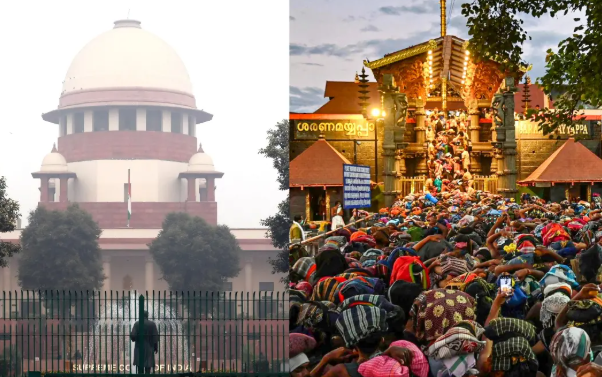
- In Indian Young Lawyers Association v. State of Kerala (2018), a 4:1 Constitution Bench ruled that:
- The exclusion violated Article 14 (equality) and Article 25 (freedom of religion).
- The practice was not an “essential religious practice” and could not override fundamental rights of women.
- Review petitions led to the matter being referred to a larger bench to examine broader questions, including the scope of judicial intervention in religious matters and the doctrine of essential religious practices.
3. Government’s Stand: Diversity Over Uniform Definition
The Centre has submitted that:
- Hinduism is not monolithic: It comprises diverse sects, beliefs, rituals, and traditions with no single founder, uniform doctrine, or central authority.
- Imposing a rigid judicial definition of “essential religious practices” risks undermining this pluralism.
- Courts should exercise restraint and avoid becoming arbiters of faith, as this may disturb long-standing community traditions and amount to judicial overreach.
4. Key Constitutional Provisions Involved
- Article 19(1)(a): Freedom of speech and expression (extended to include right to access religious places in some interpretations).
- Article 25: Freedom of conscience and right to profess, practise, and propagate religion (subject to public order, morality, health, and other provisions).
- Article 26: Rights of religious denominations to manage their own affairs in matters of religion.
- Article 14: Equality before law — central to challenges against exclusionary practices.
5. Doctrine of Essential Religious Practices (ERP)
- Developed by the Supreme Court to determine which practices are protected under Articles 25 and 26.
- Courts decide whether a practice is “essential” to a religion based on its core tenets.
- Criticism: The doctrine leads to subjective judicial interpretation, potential overreach, and erosion of religious autonomy. The current case questions whether the judiciary should continue applying this doctrine or defer more to community practices.
6. Core Issues in the Debate
- Who defines religion? — State/Judiciary vs Religious communities.
- Individual rights vs Collective faith — Gender justice vs traditional customs.
- Constitutional morality vs Social practices — Progressive interpretation vs cultural continuity.
7. Significance and Implications
- Legal: May lead to redefinition or refinement of the ERP doctrine and set limits on judicial intervention in religious matters.
- Social: Touches the broader debate on gender justice, tradition, and reform within religions.
- Political: Highlights Centre–Judiciary dynamics and the role of the State in religious affairs.
- Constitutional: Tests the limits of “principled distance” in Indian secularism — balancing religious freedom with fundamental rights.
8. Way Forward Suggested
- Develop clearer, more objective guidelines for applying the ERP doctrine.
- Ensure judicial restraint and sensitivity while protecting fundamental rights.
- Promote dialogue between communities, religious denominations, and constitutional institutions.
- Maintain a delicate balance between individual dignity, gender equality, and collective religious freedom.
UPSC CSE & State PCS Relevance
Prelims
- Key terms: Sabarimala Case (2018), Doctrine of Essential Religious Practices (ERP), Article 25, Article 26, Article 14, Constitutional Morality, Religious Denominations.
GS-2 (Polity & Governance)
- Fundamental Rights vs Religious Freedom; Judicial review of religious practices; Secularism in India; Balance between individual rights and community practices.
GS-1 (Indian Society)
- Religious pluralism and diversity in Hinduism; Social reform vs tradition; Gender and religion.
Essay / Interview
- “Courts and Religion: Should Judiciary Define Essential Religious Practices?”
- “Constitutional Morality vs Religious Autonomy: The Evolving Debate in India.”
- “Protecting Diversity While Ensuring Equality: Lessons from the Sabarimala Case.”
MCQs (Prelims Standard)
- Consider the following statements regarding the Sabarimala case:
- The 2018 Supreme Court judgment allowed women of all ages to enter the Sabarimala Temple.
- The Union Government has argued that Hinduism’s diversity should not be undermined by rigid definitions of essential practices.
- Article 26 deals with the freedom of conscience and right to profess religion. Which of the statements given above is/are correct?
(a) 1 and 2 only
(b) 2 and 3 only
(c) 1 only
(d) 1, 2 and 3
Answer: (a)
- The Doctrine of Essential Religious Practices was developed by the Supreme Court to determine:
(a) Scope of Article 19(1)(a)
(b) Which religious practices are protected under Articles 25 and 26
(c) Powers of the Election Commission
(d) Validity of personal laws
Answer: (b)
- Which Article of the Constitution guarantees freedom of religion subject to public order, morality, and health?
(a) Article 14
(b) Article 19
(c) Article 25
(d) Article 26
Answer: (c)
- The Sabarimala Temple entry restriction was traditionally based on the belief that the presiding deity is:
(a) A warrior god
(b) A Naisthika Brahmachari (eternal celibate)
(c) A goddess of fertility
(d) A form of Shiva
Answer: (b)
- The current larger bench in the Sabarimala review petitions is examining:
(a) Only the validity of the 2018 judgment
(b) Broader questions on judicial intervention in religious matters and the ERP doctrine
(c) Only women’s entry rights
(d) Temple management issues
Answer: (b)
Mains Questions
- “The Sabarimala case raises fundamental questions about the limits of judicial intervention in religious practices.” Critically examine the constitutional debate on the Doctrine of Essential Religious Practices and the Centre’s argument on preserving Hinduism’s diversity. (15 marks / 250 words)
- Discuss the tension between individual fundamental rights and collective religious freedom in the context of the ongoing Sabarimala proceedings. How should the Supreme Court balance constitutional morality with religious pluralism? (15 marks / 250 words)
- “Defining religion through judicial pronouncements may undermine the organic evolution of faith traditions.” Analyse this statement with reference to the Sabarimala case and Article 25 and 26 of the Constitution. (10 marks / 150 words)
- Essay (250 marks) “Religious Freedom versus Constitutional Morality: The Evolving Role of the Judiciary in India’s Plural Society.”
Production Linked Incentive Scheme for Food Processing Industry (PLISFPI) Exceeds Investment Targets
1. Why in News?
- The Production Linked Incentive Scheme for the Food Processing Industry (PLISFPI) has shown strong performance, with cumulative investment crossing ₹9,000 crore against a committed investment of around ₹7,000 crore.
- This overachievement indicates robust industry response and successful implementation of one of the key PLI schemes under the Atmanirbhar Bharat initiative. The scheme aims to boost value addition, expand processing capacity, promote Indian food brands globally, and generate off-farm employment, particularly in rural areas.
2. About Production Linked Incentive Scheme for Food Processing Industry (PLISFPI)
- Launched by: Ministry of Food Processing Industries (MoFPI), Government of India.
- Launch Year: 2021.
- Duration: Six years (FY 2021–22 to FY 2026–27).
- Total Financial Outlay: ₹10,900 crore.
- Core Objective: To strengthen the food processing sector by incentivising manufacturing, value addition, branding, and exports, while creating global food manufacturing champions and increasing farmer incomes through better price realisation.
3. Key Components of the Scheme
- Incentivising Manufacturing in Four Major Segments:
- Ready-to-Cook / Ready-to-Eat (RTC/RTE) foods.
- Processed Fruits & Vegetables.
- Marine Products.
- Mozzarella Cheese.
- Support for Innovative / Organic Products of SMEs.
- Branding and Marketing Abroad: Incentives for in-store branding, shelf space renting, and marketing to build strong Indian brands with global visibility.
4. Main Objectives
- Support food manufacturing entities that commit to minimum sales and investment for expansion of processing capacity and branding overseas.
- Create global food manufacturing champions from India.
- Strengthen select Indian food brands for international acceptance.
- Generate off-farm employment opportunities, especially in rural areas.
- Ensure better price realisation for farm produce, thereby increasing farmers’ income.
5. Performance So Far
- Cumulative Investment: Exceeded ₹9,000 crore (against committed ₹7,000 crore).
- The scheme has attracted significant private investment and is on track to meet or surpass overall targets by the end of FY 2026–27.
- It has contributed to capacity expansion, modernisation of food processing units, and promotion of value-added exports.
6. Significance
- Economic Impact: Boosts value addition in the agri-food sector, reduces post-harvest losses, and strengthens the farm-to-fork ecosystem.
- Employment: Creates jobs in processing, packaging, logistics, and marketing — particularly beneficial for rural and semi-urban areas.
- Export Promotion: Helps build globally competitive Indian food brands.
- Farmer Income: Ensures better demand and remunerative prices for agricultural produce.
- Atmanirbhar Bharat: Aligns with the vision of self-reliance by promoting domestic manufacturing and reducing dependence on imported processed foods.
7. UPSC CSE & State PCS Relevance
Prelims
- Key terms: PLISFPI, Production Linked Incentive Scheme, Ministry of Food Processing Industries, Ready-to-Cook/Ready-to-Eat (RTC/RTE), Mozzarella Cheese segment, Off-farm employment.
- Facts: Outlay ₹10,900 crore (2021–22 to 2026–27); Cumulative investment crossed ₹9,000 crore (as of 2026); Focus on four major segments + branding abroad.
GS-3 (Economy, Agriculture)
- Food processing industry; Production Linked Incentive schemes; Value addition in agriculture; Employment generation; Export promotion; Atmanirbhar Bharat.
GS-2 (Governance)
- Government schemes for sectoral development; Public-private partnership in economic growth.
Essay / Interview
- “Food Processing Industry: The Missing Link Between Farm and Consumer in India.”
- “Production Linked Incentive Schemes: A Tool for Self-Reliant and Atmanirbhar India.”
- “Doubling Farmers’ Income: Role of Value Addition and Modern Food Processing.”
MCQs
- Consider the following statements about the Production Linked Incentive Scheme for Food Processing Industry (PLISFPI):
- It was launched by the Ministry of Food Processing Industries.
- The total financial outlay of the scheme is ₹10,900 crore for the period 2021–22 to 2026–27.
- It provides incentives only for Ready-to-Eat food products. Which of the statements given above is/are correct?
(a) 1 and 2 only
(b) 2 and 3 only
(c) 1 only
(d) 1, 2 and 3
Answer: (a)
- As per recent updates, the cumulative investment under PLISFPI has crossed:
(a) ₹5,000 crore
(b) ₹7,000 crore
(c) ₹9,000 crore
(d) ₹12,000 crore
Answer: (c)
- Which of the following is NOT one of the four major food product segments incentivised under PLISFPI?
(a) Ready-to-Cook / Ready-to-Eat foods
(b) Processed Fruits & Vegetables
(c) Marine Products
(d) Dairy-based beverages
Answer: (d)
- The PLISFPI aims to achieve all the following EXCEPT:
(a) Expand processing capacity
(b) Promote Indian brands globally
(c) Generate off-farm employment
(d) Regulate food prices in the domestic market
Answer: (d)
- The PLISFPI is part of which broader government initiative?
(a) Make in India
(b) Atmanirbhar Bharat
(c) Digital India
(d) Swachh Bharat
Answer: (b)
Mains Questions
- “The Production Linked Incentive Scheme for the Food Processing Industry is a strategic intervention to unlock the potential of India’s agri-food sector.” Discuss the objectives, components, and early outcomes of PLISFPI and its role in doubling farmers’ income. (15 marks / 250 words)
- Examine how Production Linked Incentive schemes like PLISFPI contribute to value addition, employment generation, and export promotion in the food processing sector. What challenges remain in achieving the scheme’s full potential? (10 marks / 150 words)
- “Strengthening the food processing industry is key to reducing post-harvest losses and improving farmer incomes.” Analyse this statement in the context of the PLISFPI and its performance so far. (15 marks / 250 words)
- Essay (250 marks) “From Farm to Global Plate: The Role of Food Processing and Incentive Schemes in Building a Self-Reliant India.”
Shellear Fish Climbs 15-Metre Waterfall in Congo: Rare Adaptation in Extreme Environment
1. Why in News?
- Scientists have confirmed a remarkable behaviour in the Shellear fish (Parakneria thysi): it can climb vertical waterfalls up to 15 metres (50 feet) tall in the Democratic Republic of the Congo (DRC).
- This discovery, reported in early April 2026, highlights one of the most extraordinary adaptations in the animal kingdom. The tiny fish uses specialised anatomical features to scale the Luvilombo Falls on the Luvilombo River in the upper Congo Basin. Researchers believe the climbing helps the fish reach upstream areas with better living conditions, less competition, and fewer predators.
2. About Shellear Fish (Parakneria thysi)
- Scientific Name: Parakneria thysi
- Common Name: Shellear fish (due to its shell-like appearance or habitat).
- Habitat: Benthopelagic freshwater species found in the upper Congo Basin, particularly around the Luvilombo Falls on the Luvilombo River.
- Size: Tiny fish, typically 37–48 mm in length, growing up to a maximum of around 96 mm.
- Unique Adaptation for Climbing:
- Possesses tiny, hook-like projections on specialised pads on its pectoral and pelvic fins.
- Has hypertrophied (enlarged) muscles that allow it to support its body weight while climbing vertical rock surfaces against strong water flow.
- This enables the fish to “walk” or crawl up steep, wet rock faces in fast-flowing waterfalls.
3. Why Do They Climb?
Researchers suggest the primary reasons are:
- To reach upstream habitats with more suitable living conditions.
- To access areas with less competition for food and breeding grounds.
- To escape predators that are more abundant in downstream pools.
This behaviour is an excellent example of evolutionary adaptation to extreme environments.
4. Threats to the Species
The study identified two major human-induced threats:
- Illegal fishing using fine-mesh mosquito nets, which easily catch these small fish.
- Water extraction for irrigation, which in some years has significantly depleted the flow of the Luvilombo River, affecting the fish’s habitat and climbing routes.
5. Significance of the Discovery
- Demonstrates the incredible biodiversity and adaptive capabilities of species in the Congo Basin, one of the world’s most important freshwater ecosystems.
- Adds to the growing list of “climbing” or “amphibious” fish (similar to mudskippers or climbing perch) that challenge conventional understanding of fish locomotion.
- Highlights the urgent need for conservation of fragile riverine ecosystems facing anthropogenic pressures.
6. UPSC CSE & State PCS Relevance
Prelims
- Key terms: Shellear fish (Parakneria thysi), Luvilombo Falls, Benthopelagic, Hypertrophied muscles, Congo Basin, Climbing adaptation in fish.
- Facts: Climbs 15-metre (50 feet) waterfall; Found in upper Congo Basin; Tiny fish (37–96 mm); Threats — illegal fine-mesh fishing and water extraction for irrigation.
GS-3 (Environment & Ecology)
- Biodiversity and species adaptation; Human-wildlife conflict and anthropogenic threats to freshwater ecosystems; Conservation of endemic species in biodiversity hotspots.
GS-1 (Geography)
- Congo Basin ecosystem; Riverine geography and freshwater biodiversity.
Essay / Interview
- “Nature’s Ingenious Adaptations: Lessons from the Shellear Fish’s Waterfall Climb.”
- “Protecting Freshwater Ecosystems in the Face of Human Pressures: The Case of the Congo Basin.”
- “From Survival Strategies to Conservation Imperatives: Understanding Extreme Adaptations in Fragile Habitats.”
MCQs (Prelims Standard)
- Consider the following statements about the Shellear fish:
- It is scientifically known as Parakneria thysi.
- It can climb vertical waterfalls up to 15 metres tall.
- It is a marine species found in coastal waters. Which of the statements given above is/are correct?
(a) 1 and 2 only
(b) 2 and 3 only
(c) 1 only
(d) 1, 2 and 3
Answer: (a)
- The Shellear fish is found in which river basin?
(a) Amazon Basin
(b) Upper Congo Basin
(c) Mekong Basin
(d) Nile Basin
Answer: (b)
- Which anatomical features help the Shellear fish climb waterfalls?
- Hook-like projections on fin pads
- Hypertrophied muscles
- Suction cups on the body Select the correct answer using the code given below:
(a) 1 and 2 only
(b) 2 and 3 only
(c) 1 only
(d) 1, 2 and 3
Answer: (a)
- The main human threats to the Shellear fish include:
- Illegal fishing with fine-mesh mosquito nets
- Water extraction for irrigation
- Large-scale dam construction Select the correct answer using the code given below:
(a) 1 and 2 only
(b) 2 and 3 only
(c) 1 only
(d) 1, 2 and 3
Answer: (a)
- The Shellear fish is best described as:
(a) A large predatory fish
(b) A tiny freshwater climbing fish
(c) A deep-sea angler fish
(d) A coral reef species
Answer: (b)
Mains Questions
- “Extreme adaptations in species like the Shellear fish highlight the resilience of life in challenging environments.” Discuss the significance of such adaptations and the threats they face due to human activities. (15 marks / 250 words)
- Examine the importance of the Congo Basin as a global biodiversity hotspot and the emerging challenges to its freshwater ecosystems. (10 marks / 150 words)
- “Small species often reveal big ecological truths.” In the light of the recent discovery of the Shellear fish’s climbing behaviour, analyse how studying lesser-known species contributes to biodiversity conservation efforts. (15 marks / 250 words)
Uttarakhand High Court Stays Felling of Oak Trees in Mussoorie for Construction
1. Why in News?
- The Uttarakhand High Court has stayed the felling of oak trees in Mussoorie for a construction project by the Mussoorie Municipal Council.
- The interim order came in response to a petition highlighting the ecological importance of oak forests in the Himalayan region. The court’s intervention underscores the growing judicial scrutiny on environmental clearances and the need to protect keystone species like oak in ecologically sensitive hill areas.
2. About Oak Trees (Genus Quercus)
- Classification: Belong to the genus Quercus in the Fagaceae family.
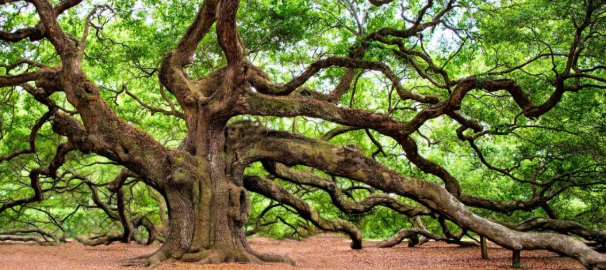
- Geographic Range: Widely distributed across North America, Europe, Asia, and parts of Africa. In India, they are dominant in the Himalayan moist temperate forests.
- Elevation: In the Indian Himalayas, 35 species of oak are reported between 800 and 3,000 metres above sea level.
- Oak Species in Uttarakhand:
- Banj oak (Quercus leucotrichophora)
- Moru oak (Quercus floribunda)
- Kharsu oak (Quercus semecarpifolia)
- Rianj oak
- Phaliath oak
3. Climatic and Soil Requirements
- Climate: Thrive in temperate zones with cold winters and warm summers. They are well-adapted to the Himalayan climate.
- Soil: Prefer well-drained soils and can tolerate sandy, loamy, and clayey soils.
4. Ecological and Socio-Economic Role of Oak Trees
Oak trees are considered keystone species in the Himalayan ecosystem because of the multiple services they provide:
- Watershed Protection: Oak forests promote recharge of springs and regulate water flow, playing a vital role in maintaining Himalayan hydrology.
- Soil Conservation: Their deep root systems prevent soil erosion on steep slopes.
- Biodiversity Support: Host a rich web of life — lichens, bryophytes, pteridophytes, insects, birds, and mammals.
- Livelihood Support: Provide firewood, fodder, and minor forest produce to local communities. They are often called the “lifeline” for hill villages.
- Climate Resilience: Act as carbon sinks and help maintain micro-climates in the fragile Himalayan region.
5. Significance of the Court Order
- Highlights the ecological sensitivity of Mussoorie and surrounding areas in the Shivalik and lower Himalayan ranges.
- Reinforces the principle that development projects must balance infrastructure needs with environmental conservation.
- Oak forests in Uttarakhand are already under pressure from urbanisation, tourism, and infrastructure development. Protecting them is critical for watershed management, biodiversity, and climate change mitigation.
6. UPSC CSE & State PCS Relevance
Prelims
- Key terms: Oak trees (Genus Quercus), Banj oak, Moru oak, Kharsu oak, Keystone species, Himalayan moist temperate forests.
- Facts: 35 oak species reported in Indian Himalayas (800–3,000 m); Uttarakhand High Court stayed felling in Mussoorie (2026); Ecological role in watershed protection and biodiversity.
GS-1 (Geography)
- Himalayan ecology; Vegetation zones in the Himalayas; Soil and water conservation in hill regions.
GS-3 (Environment & Ecology)
- Keystone species and ecosystem services; Human–environment conflict in ecologically sensitive zones; Judicial intervention in environmental matters; Forest conservation vs development.
Essay / Interview
- “Protecting Keystone Species like Oak is Essential for Himalayan Ecological Security.”
- “Development vs Conservation: The Challenge of Sustainable Growth in the Indian Himalayas.”
- “Role of Judiciary in Environmental Governance: Recent Trends in India.”
MCQs (Prelims Standard)
- Consider the following statements about oak trees in India:
- They belong to the genus Quercus in the Fagaceae family.
- In the Indian Himalayas, they are found between 800 and 3,000 metres elevation.
- Banj oak, Moru oak, and Kharsu oak are common species in Uttarakhand. Which of the statements given above is/are correct?
(a) 1 only
(b) 1 and 2 only
(c) 1, 2 and 3
(d) 2 and 3 only
Answer: (c)
- The Uttarakhand High Court recently stayed the felling of oak trees in:
(a) Nainital
(b) Mussoorie
(c) Almora
(d) Dehradun
Answer: (b)
- Oak trees are considered keystone species in the Himalayas primarily because they:
(a) Provide timber for construction only
(b) Support watershed protection, soil conservation, and biodiversity
(c) Are used exclusively for ornamental purposes
(d) Grow only in high-altitude alpine meadows
Answer: (b)
- Which of the following is NOT a major ecological service provided by oak forests in the Himalayas? (a) Recharge of springs (b) Prevention of soil erosion (c) Hosting lichens, bryophytes, and pteridophytes (d) Increasing surface runoff and flooding Answer: (d)
- The genus to which oak trees belong is:
(a) Pinus
(b) Quercus
(c) Cedrus
(d) Rhododendron
Answer: (b)
Mains Questions
- “Oak trees are the lifeline of the Himalayan ecosystem.” In the light of the recent Uttarakhand High Court order staying oak felling in Mussoorie, discuss the ecological and socio-economic importance of oak forests and the challenges of balancing development with conservation in hill states. (15 marks / 250 words)
- Examine the role of keystone species like oak in maintaining Himalayan ecology. Why is judicial intervention increasingly becoming necessary in environmental matters in ecologically sensitive regions? (10 marks / 150 words)
- “Development projects in the Himalayas often come at the cost of critical forest ecosystems.” Analyse this statement with reference to the importance of oak forests and recent instances of conflict between infrastructure and environment. (15 marks / 250 words)
Tagged Sanderling Travels Over 7,400 km from South Australia to Narcondam Island
1. Why in News?
- A tagged Sanderling (Calidris alba), a small migratory shorebird, has been spotted on the remote Narcondam Island in the Andaman and Nicobar archipelago.
- The bird was originally tagged in South Australia and covered an astonishing distance of more than 7,400 km. This remarkable long-distance migration record highlights the incredible endurance of migratory birds and the importance of India’s remote islands as stopover or wintering sites along the East Asian–Australasian Flyway.
2. About Sanderling (Calidris alba)
- Common Name: Sanderling
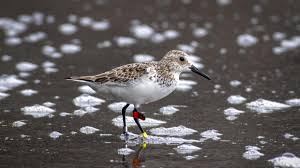
- Scientific Name: Calidris alba
- Description: A small, plump wading bird.
- Name derives from Old English “sand-yrðling”, meaning “sand-ploughman”.
- In winter plumage: Very pale, almost white with a dark shoulder patch.
- In breeding/summer plumage: Face and throat turn brick-red.
- Habitat:
- Prefers coastal areas including tidal sand flats, mud flats, and shores of lakes and rivers.
- Also found in moist vegetated sites, well-drained clay or gravel slopes, and tops of stony ridges.
- Distribution: Breeds in the Arctic regions of North America, Europe, and Asia. Winters in coastal areas across South America, Africa, Oceania, and parts of Asia (including India).
- Migration:
- Complete long-distance migrants.
- Travel between 3,000 to 10,000 km annually between breeding and wintering grounds.
- Follow the East Asian–Australasian Flyway.
- Diet: Carnivorous (mainly molluscivores and insectivores). Feeds on small crabs, other invertebrates, and insects on beaches and mudflats.
- Threats:
- Loss and degradation of wetland and coastal habitats.
- Pollution and pesticide contamination.
- Disturbance from human activities on beaches.
- Conservation Status: IUCN Red List: Least Concern.
3. Significance of the Sighting on Narcondam Island
- Narcondam Island is a remote, volcanic island in the Andaman Sea, known for its unique biodiversity and as a habitat for the endangered Narcondam Hornbill.
- The sighting of a Sanderling that flew over 7,400 km from South Australia demonstrates the global connectivity of migratory flyways and the ecological importance of India’s island territories as critical stopover or wintering sites.
- It also highlights the need for conservation of remote coastal and island habitats to support long-distance migratory birds.
UPSC CSE & State PCS Relevance
Prelims
- Key terms: Sanderling (Calidris alba), East Asian–Australasian Flyway, Narcondam Island, Long-distance migration, Shorebird.
- Facts: Tagged bird travelled >7,400 km from South Australia to Narcondam Island (2026); Small wading bird; IUCN — Least Concern; Breeds in Arctic, winters in southern continents.
GS-3 (Environment & Ecology)
- Migratory birds and flyways; Biodiversity of Andaman and Nicobar Islands; Threats to coastal and wetland ecosystems; Conservation of migratory species.
GS-1 (Geography)
- Indian island territories; Biogeography and migratory routes.
Essay / Interview
- “Migratory Birds as Indicators of Ecosystem Health and Global Connectivity.”
- “Protecting Remote Islands and Coastal Habitats for Long-Distance Migrants.”
- “India’s Role in Conserving the East Asian–Australasian Flyway.”
MCQs (Prelims Standard)
- Consider the following statements about the Sanderling:
- It is a small plump wading bird scientifically known as Calidris alba.
- It recently flew over 7,400 km from South Australia to Narcondam Island.
- It is listed as Critically Endangered on the IUCN Red List. Which of the statements given above is/are correct?
(a) 1 and 2 only
(b) 2 and 3 only
(c) 1 only
(d) 1, 2 and 3
Answer: (a)
- The Sanderling is primarily:
(a) A resident bird of the Andaman Islands
(b) A long-distance migratory shorebird
(c) A forest-dwelling species
(d) A pelagic seabird
Answer: (b)
- Narcondam Island, where the tagged Sanderling was spotted, is located in:
(a) Lakshadweep
(b) Andaman and Nicobar archipelago
(c) Gulf of Mannar
(d) Sundarbans
Answer: (b)
- Which of the following is a major threat to Sanderling populations?
(a) Loss of wetland and coastal habitats
(b) Excessive predation by large mammals
(c) Competition with domestic poultry
(d) Overhunting for feathers
Answer: (a)
- The Sanderling belongs to which group of birds?
(a) Raptors
(b) Shorebirds (waders)
(c) Parrots
(d) Owls
Answer: (b)
Mains Questions
- “Migratory birds like the Sanderling serve as vital indicators of the health of global ecosystems and flyways.” Discuss the ecological significance of long-distance migratory shorebirds and the challenges they face, with special reference to India’s island territories. (15 marks / 250 words)
- Examine the importance of the Andaman and Nicobar Islands in supporting migratory bird species. What measures are needed to protect their habitats from emerging threats? (10 marks / 150 words)
- “Conservation of even common species like the Sanderling is essential for maintaining ecological balance.” Analyse this statement in the context of the recent sighting of a long-distance migrant on Narcondam Island. (15 marks / 250 words)
Pradhan Mantri Mudra Yojana (PMMY) Completes 11 Years: Empowering Micro and Small Entrepreneurs
1. Why in News?
- The Pradhan Mantri Mudra Yojana (PMMY), one of the flagship schemes of the Government of India, completed 11 years on 8 April 2026.
- Launched on 8 April 2015, the scheme has emerged as a major tool for providing collateral-free credit to micro and small entrepreneurs, particularly from underserved sections. Over the years, it has significantly contributed to financial inclusion, job creation, and the growth of the non-farm sector in India.
2. About Pradhan Mantri Mudra Yojana (PMMY)
- Launch Date: 8 April 2015
- Ministry: Ministry of Finance (implemented through MUDRA – Micro Units Development & Refinance Agency Ltd.)
- Objective: To fund the unfunded micro-enterprises and small businesses by providing collateral-free loans for income-generating activities in the non-farm sector.
- Target Beneficiaries: Any Indian citizen with a business plan for a non-farm income-generating activity such as manufacturing, processing, trading, or services (including activities allied to agriculture like poultry, dairy, beekeeping, etc.).
3. Key Features of PMMY
- Loan Categories (based on stage of growth and funding needs):
|
Category |
Loan Limit |
Purpose |
|
Shishu |
Up to ₹50,000 |
Early-stage micro units |
|
Kishor |
Above ₹50,000 and up to ₹5 lakh |
Growing micro enterprises |
|
Tarun |
Above ₹5 lakh and up to ₹10 lakh |
Established small businesses |
|
Tarun Plus |
Above ₹10 lakh and up to ₹20 lakh |
Expanded support for larger needs |
- Loan Components: Covers both term loans and working capital requirements.
- Lending Institutions: Commercial Banks, Regional Rural Banks (RRBs), Small Finance Banks, Microfinance Institutions (MFIs), and Non-Banking Financial Companies (NBFCs).
- Interest Rate: Determined as per RBI guidelines; no collateral required.
- Repayment: Flexible terms based on the nature of the activity.
- MUDRA: Micro Units Development & Refinance Agency Ltd. was set up as a refinance institution to support lending institutions under PMMY.
4. Significance of the Scheme
- Financial Inclusion: Provides easy access to formal credit for millions of small entrepreneurs who were earlier dependent on informal sources.
- Employment Generation: Supports off-farm and non-farm jobs, especially in rural and semi-urban areas.
- Women Empowerment: A large proportion of beneficiaries are women entrepreneurs.
- Economic Growth: Boosts micro and small enterprises, which form the backbone of India’s economy.
- Atmanirbhar Bharat: Aligns with the vision of self-reliance by promoting local entrepreneurship and reducing dependence on subsidies.
5. Performance Highlights (as of April 2026)
- The scheme has disbursed loans to crores of beneficiaries over 11 years.
- It has played a key role in expanding credit flow to the bottom of the pyramid and supporting post-COVID economic recovery.
- Continuous focus on Shishu category loans has helped first-time and micro-entrepreneurs.
6. UPSC CSE & State PCS Relevance
Prelims
- Key terms: Pradhan Mantri Mudra Yojana (PMMY), MUDRA, Shishu/Kishor/Tarun/Tarun Plus categories, Micro Units Development & Refinance Agency.
- Facts: Launched on 8 April 2015; Completed 11 years on 8 April 2026; Loan categories based on amount; No collateral required.
GS-3 (Economy)
- Financial inclusion; Credit delivery to MSMEs; Non-farm sector growth; Employment generation; Government schemes for entrepreneurship.
GS-2 (Governance)
- Implementation of flagship schemes; Role of MUDRA and banking institutions in inclusive growth.
Essay / Interview
- “Mudra Yojana: A Tool for Financial Inclusion and Grassroots Entrepreneurship.”
- “Empowering the Unfunded: Challenges and Achievements of PMMY in India’s Economic Landscape.”
- “From Micro to Macro: How Small Loans Drive Big Economic and Social Change.”
MCQs (Prelims Standard)
- Consider the following statements about Pradhan Mantri Mudra Yojana (PMMY):
- It was launched on 8 April 2015.
- Loans are provided under Shishu, Kishor, Tarun, and Tarun Plus categories.
- Collateral is mandatory for all loans above ₹50,000. Which of the statements given above is/are correct?
(a) 1 and 2 only
(b) 2 and 3 only
(c) 1 only
(d) 1, 2 and 3
Answer: (a)
- The maximum loan limit under the Tarun category of PMMY is:
(a) ₹5 lakh
(b) ₹10 lakh
(c) ₹20 lakh
(d) ₹50 lakh
Answer: (b)
- MUDRA stands for:
(a) Micro Units Development & Refinance Agency
(b) Microfinance Units Development & Rural Advancement
(c) Modern Units Development & Refinance Authority
(d) Micro Enterprises Development & Rural Agency
Answer: (a)
- PMMY primarily aims to provide loans to:
(a) Large corporate houses
(b) Unfunded micro and small enterprises
(c) Agricultural farmers only
(d) Export-oriented units
Answer: (b)
- Which of the following institutions is NOT involved in lending under PMMY?
(a) Commercial Banks
(b) Regional Rural Banks
(c) Small Finance Banks
(d) Insurance Companies
Answer: (d)
Mains Questions
- “Pradhan Mantri Mudra Yojana has emerged as a key instrument for financial inclusion and entrepreneurship development in India.” Discuss the features, categories, and impact of the scheme after 11 years of its implementation. (15 marks / 250 words)
- Examine the role of Mudra loans in generating off-farm employment and supporting small businesses. What are the major challenges in the effective implementation of PMMY? (10 marks / 150 words)
- “Access to formal credit remains a major hurdle for micro-entrepreneurs in India.” Analyse this statement in the context of the achievements and limitations of the Pradhan Mantri Mudra Yojana. (15 marks / 250 words)
- Essay (250 marks) “From Micro Loans to Macro Impact: The Journey of Financial Inclusion through Schemes like PMMY.”
Angola Emerges as Key Alternative Gas Supplier to India from West Asia
1. Why in News?
- Angola has emerged as an important alternative source of natural gas for India, helping diversify energy imports away from traditional West Asian suppliers amid geopolitical uncertainties.
- Recent engagements between Indian companies and Angolan authorities have focused on long-term LNG (liquefied natural gas) supply agreements and exploration opportunities. This development aligns with India’s strategy of energy security through diversification and deeper engagement with African nations.
2. About Angola
- Location: Southwestern coast of Africa, bordering the Atlantic Ocean.

- Bordering Countries:
- Republic of the Congo (northwest)
- Democratic Republic of the Congo (north and northeast)
- Zambia (southeast)
- Namibia (south)
- Capital: Luanda (major port city and economic hub).
- Geographical Features:
- Climate: Tropical climate with a distinct dry season. Influenced by the cold Benguela Current along the coast and varying elevation.
- Major Rivers: Cuango River and Cuanza (Kwanza) River — important for hydropower generation and inland navigation.
- Major Waterfall: Calandula Waterfalls (Kalandula Falls) on the Lucala River — one of the largest in Africa.
- Highest Peak: Mount Moco — the tallest mountain in Angola.
- Natural Resources: Rich in petroleum (main export), diamonds, iron ore, phosphates, copper, feldspar, gold, bauxite, and uranium. Angola is one of Africa’s largest oil producers.
3. Significance for India
- Energy Diversification: Angola offers a reliable alternative to West Asian gas supplies, reducing risks associated with geopolitical tensions in the Gulf region.
- LNG Potential: Growing interest in long-term LNG contracts and joint exploration projects.
- Broader Cooperation: Strengthens India-Africa ties under frameworks like the Africa-India Forum Summit and aligns with India’s ** SAGAR** (Security and Growth for All in the Region) vision in the Indian Ocean.
- Economic Complementarity: India can export pharmaceuticals, machinery, and IT services while importing energy and minerals from Angola.
4. UPSC CSE & State PCS Relevance
Prelims
- Key terms: Angola, Benguela Current, Calandula Waterfalls, Mount Moco, Cuango and Cuanza Rivers, Atlantic Coast of Africa.
- Facts: Southwestern Atlantic coast of Africa; Borders Congo, DRC, Zambia, Namibia; Rich in petroleum and diamonds; Emerging gas supplier to India (2026).
GS-2 (International Relations)
- India-Africa relations; Energy diplomacy; Diversification of energy sources; South-South cooperation.
GS-1 (Geography)
- Physical geography of Africa; Major rivers and waterfalls; Climate influenced by ocean currents.
GS-3 (Economy)
- Energy security; Oil and gas imports; Geopolitical risks in energy supply chains.
Essay / Interview
- “Energy Diversification: India’s Strategic Shift Towards African Partners like Angola.”
- “Geopolitics of Energy: Reducing Dependence on West Asia through New Partnerships.”
- “India-Africa Engagement: From Historical Ties to Modern Energy and Economic Cooperation.”
MCQs (Prelims Standard)
- Consider the following statements about Angola:
- It is located on the southwestern Atlantic coast of Africa.
- It shares borders with the Democratic Republic of the Congo and Zambia.
- It has emerged as an alternative gas supplier to India. Which of the statements given above is/are correct?
(a) 1 only
(b) 1 and 2 only
(c) 1, 2 and 3
(d) 2 and 3 only
Answer: (c)
- The capital city of Angola is:
(a) Kinshasa
(b) Luanda
(c) Windhoek
(d) Lusaka
Answer: (b)
- Which ocean current significantly influences the climate of Angola’s coastal region?
(a) Gulf Stream
(b) Benguela Current
(c) Agulhas Current
(d) Canary Current
Answer: (b)
- Which of the following is NOT a bordering country of Angola?
(a) Namibia
(b) Zambia
(c) Botswana
(d) Democratic Republic of the Congo
Answer: (c)
- Angola is one of Africa’s largest producers of:
(a) Gold
(b) Petroleum
(c) Cocoa
(d) Copper
Answer: (b)
Mains Questions
- “Diversification of energy sources is critical for India’s energy security.” Discuss Angola’s emergence as an alternative gas supplier and its broader implications for India-Africa relations. (15 marks / 250 words)
- Examine the geographical and resource profile of Angola and evaluate its strategic importance for India in the context of energy diplomacy. (10 marks / 150 words)
- “Geopolitical shifts in West Asia are pushing India to deepen ties with African nations for energy needs.” Analyse this statement with special reference to recent developments involving Angola. (15 marks / 250 words)
TRAI Releases Draft Telecom Consumer Protection (Thirteenth Amendment) Regulation, 2026
1. Why in News?
- The Telecom Regulatory Authority of India (TRAI) has released the Draft Telecom Consumer Protection (Thirteenth Amendment) Regulation, 2026.
- This amendment aims to further strengthen consumer safeguards, improve transparency in billing and service delivery, and address emerging issues in the rapidly evolving telecom sector. The draft has been put out for public consultation, reflecting TRAI’s continued focus on consumer-centric regulation.
2. About Telecom Regulatory Authority of India (TRAI)
- Establishment: Created by the Telecom Regulatory Authority of India Act, 1997 (amended in 2000).
- Mandate: To regulate telecom services in India, including tariff fixation/revision (a function earlier handled directly by the Central Government).
- Mission: To create and nurture conditions for the growth of telecommunications in India so that the country can play a leading role in the emerging global information society.
3. Key Functions of TRAI
- Regulatory Role: Issues regulations, orders, and recommendations on:
- Tariffs

- Quality of Service (QoS)
- Interconnection
- Spectrum management
- Consumer protection
- Tariffs
- Policy Advisory Role: Provides recommendations to the government on licensing, spectrum allocation, and other policy matters.
- Consumer Protection: Focuses on transparency, grievance redressal, and protection from unfair practices.
4. Composition of TRAI
- Structure:
- One Chairperson
- Maximum two full-time members
- Two part-time members
- Tenure: Members serve for three years or until the age of 65 years, whichever is earlier.
- Appointment: Made by the Central Government.
5. Related Institution: TDSAT
- The Telecom Disputes Settlement and Appellate Tribunal (TDSAT) was established through an amendment to the TRAI Act in 2000.
- Functions:
- Adjudicates disputes between:
- Licensor and licensee
- Two or more service providers
- Service provider and consumers
- Hears appeals against any direction, decision, or order of TRAI.
- Adjudicates disputes between:
6. Significance of the Thirteenth Amendment (2026)
- Aims to update consumer protection norms in line with new challenges such as digital billing transparency, spam control, data usage clarity, and service quality standards.
- Reinforces TRAI’s role as a proactive regulator in a competitive and technology-driven telecom market.
- Supports the broader goal of Digital India by ensuring affordable, reliable, and transparent telecom services for citizens.
7. UPSC CSE & State PCS Relevance
Prelims
- Key terms: TRAI, Telecom Regulatory Authority of India Act 1997, TDSAT, Draft Telecom Consumer Protection (Thirteenth Amendment) Regulation 2026, Quality of Service (QoS).
- Facts: Established under 1997 Act; Chairperson + max 2 full-time + 2 part-time members; Tenure 3 years or till 65 years; TDSAT set up in 2000.
GS-2 (Governance & Polity)
- Regulatory bodies in India; Consumer protection in digital/telecom sector; Separation of regulatory and adjudicatory functions (TRAI vs TDSAT).
GS-3 (Economy & Science & Technology)
- Telecom sector regulation; Digital infrastructure; Consumer rights in emerging technologies.
Essay / Interview
- “Regulatory Bodies in India: Balancing Growth, Competition and Consumer Protection in the Telecom Sector.”
- “From Monopoly to Competition: Evolution of Telecom Regulation in India.”
- “Digital Consumer Rights in the Era of Rapid Technological Change.”
MCQs (Prelims Standard)
- Consider the following statements about TRAI:
- It was established under the Telecom Regulatory Authority of India Act, 1997.
- It has the power to fix and revise tariffs for telecom services.
- TDSAT was set up to adjudicate disputes and hear appeals against TRAI orders. Which of the statements given above is/are correct?
(a) 1 only
(b) 1 and 2 only
(c) 1, 2 and 3
(d) 2 and 3 only
Answer: (c)
- The Thirteenth Amendment Regulation, 2026 released by TRAI pertains to:
(a) Spectrum allocation
(b) Telecom consumer protection
(c) Interconnection norms
(d) Universal Service Obligation Fund
Answer: (b)
- The maximum number of full-time members (excluding Chairperson) in TRAI is:
(a) One
(b) Two
(c) Three
(d) Five
Answer: (b)
- TDSAT was established in:
(a) 1997
(b) 2000
(c) 2005
(d) 2010
Answer: (b)
- Which of the following is NOT a function of TRAI?
(a) Tariff regulation
(b) Adjudication of disputes between service providers
(c) Quality of Service monitoring
(d) Issuing recommendations on licensing
Answer: (b)
Mains Questions
- “TRAI has played a pivotal role in transforming India’s telecom sector from a monopoly to a competitive market.” Discuss the mandate, functions, and evolving role of TRAI in the context of consumer protection and digital governance. (15 marks / 250 words)
- Examine the need for continuous updation of consumer protection regulations in the telecom sector. In this light, evaluate the significance of the Draft Telecom Consumer Protection (Thirteenth Amendment) Regulation, 2026. (10 marks / 150 words)
- “Effective regulation requires a clear separation between regulatory and adjudicatory functions.” Analyse this statement with reference to the roles of TRAI and TDSAT in India’s telecom ecosystem. (15 marks / 250 words)
Chief Election Commissioner: Appointment, Powers, Removal Process and Recent Developments
1. Why in News?
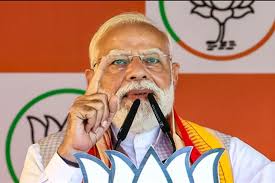
- Notices submitted by Opposition MPs in both Houses of Parliament seeking the removal of Chief Election Commissioner Gyanesh Kumar were rejected by the Rajya Sabha Chairman and Lok Sabha Speaker.
- The presiding officers held that the allegations did not meet the high constitutional threshold of “proved misbehaviour or incapacity” required under Article 324(5). The notices, signed by 63 Rajya Sabha and 130 Lok Sabha members, contained seven charges, but were found to lack sufficient evidence or prima facie merit. Some issues were already under judicial consideration or had been adjudicated earlier. This episode has once again brought the appointment, independence, and removal process of the CEC into focus.
2. Office of the Chief Election Commissioner
- The Chief Election Commissioner (CEC) is the head of the Election Commission of India (ECI), a constitutional body established under Article 324 of the Constitution.
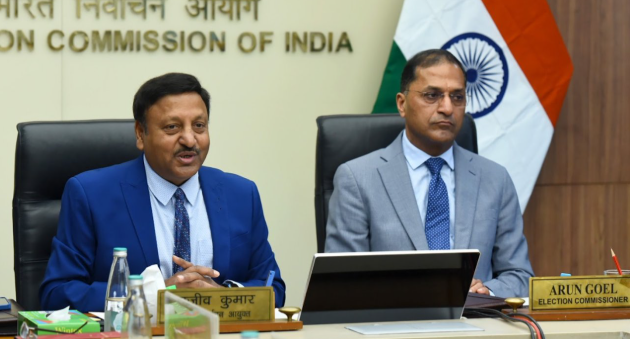
- The ECI is responsible for the superintendence, direction, and control of the conduct of free and fair elections to:
- Parliament
- State Legislatures
- Offices of the President and Vice-President
3. Appointment of the CEC
- Appointed by the President of India.
- As per the Chief Election Commissioner and Other Election Commissioners Act, 2023, the appointment is made on the recommendation of a Selection Committee consisting of:
- Prime Minister (Chairperson)
- Leader of Opposition in the Lok Sabha
- One Union Cabinet Minister (nominated by the Prime Minister)
This mechanism was introduced to bring greater transparency and balance in the selection process.
4. Tenure and Service Conditions
- Tenure: Six years or until the age of 65 years, whichever is earlier.
- Service conditions cannot be varied to the disadvantage of the CEC after appointment, ensuring functional independence.
5. Powers and Functions of the CEC/ECI
Under Article 324, the Election Commission (headed by the CEC) has wide-ranging powers, including:
- Preparation and revision of electoral rolls.
- Conduct of free and fair elections.
- Enforcement of the Model Code of Conduct.
- Monitoring of election expenditure.
- Plenary powers to act in areas where law is silent, to ensure the integrity of the electoral process (affirmed by the Supreme Court).
6. Removal Process of the CEC
- The removal of the CEC is similar to that of a Supreme Court Judge.
- Under Article 324(5), the CEC can be removed by the President only on grounds of proved misbehaviour or incapacity.
- The process requires:
- A motion passed in both Houses of Parliament.
- Special majority: Majority of the total membership of the House and two-thirds of the members present and voting.
This high threshold protects the office from arbitrary or politically motivated removal and safeguards institutional independence.
7. Recent Rejection of Removal Notices (2026)
- Allegations included claims of biased appointment, differential treatment, refusal to share electoral data, and issues related to the Special Intensive Revision (SIR) of electoral rolls.
- The presiding officers ruled that:
- Many allegations lacked evidence.
- Some were already under judicial review.
- Others did not meet the constitutional standard of “misbehaviour”.
- The decision reinforced the high bar required for initiating removal proceedings against the CEC.
8. UPSC CSE & State PCS Relevance
Prelims
- Key terms: Chief Election Commissioner, Article 324, Selection Committee (2023 Act), Proved misbehaviour or incapacity, Plenary powers of ECI, TDSAT (though not directly related here).
- Facts: CEC appointed by President on recommendation of committee (PM + LoP + Cabinet Minister); Removal like Supreme Court Judge; Tenure 6 years or till 65 years.
GS-2 (Polity & Governance)
- Constitutional bodies; Independence of Election Commission; Appointment and removal of constitutional functionaries; Judicial review and parliamentary oversight.
Essay / Interview
- “Institutional Independence of the Election Commission: Challenges and Safeguards.”
- “Balancing Accountability and Autonomy: The Removal Process of the Chief Election Commissioner.”
- “Free and Fair Elections: The Role and Challenges Before the Election Commission of India.”
MCQs (Prelims Standard)
- Consider the following statements regarding the Chief Election Commissioner:
- He is appointed by the President on the recommendation of a Selection Committee.
- He can be removed by the President on grounds of proved misbehaviour or incapacity.
- His tenure is five years or until the age of 65, whichever is earlier. Which of the statements given above is/are correct?
(a) 1 and 2 only
(b) 2 and 3 only
(c) 1 only
(d) 1, 2 and 3
Answer: (a)
- The Selection Committee for appointment of CEC includes:
- Prime Minister
- Leader of Opposition in Lok Sabha
- Chief Justice of India Select the correct answer using the code given below:
(a) 1 and 2 only
(b) 2 and 3 only
(c) 1 and 3 only
(d) 1, 2 and 3
Answer: (a)
- Removal of the Chief Election Commissioner requires:
- (a) Simple majority in Lok Sabha
- (b) Special majority in both Houses of Parliament
- (c) Recommendation of the Supreme Court
- (d) Approval by the President alone
- Answer: (b)
- Under which Article of the Constitution is the Election Commission of India established?
(a) Article 280
(b) Article 324
(c) Article 315
(d) Article 148
Answer: (b)
- The recent notices seeking removal of CEC Gyanesh Kumar were rejected primarily on the ground of:
(a) Lack of evidence and failure to establish prima facie misbehaviour
(b) Lack of support from the ruling party
(c) Pending Supreme Court case
(d) Technical error in notice format
Answer: (a)
Mains Questions
- “The independence of the Election Commission is vital for the health of Indian democracy.” Discuss the appointment, powers, and removal process of the Chief Election Commissioner in this context. (15 marks / 250 words)
- Examine the significance of the 2023 Chief Election Commissioner and Other Election Commissioners Act in ensuring transparency in the appointment process. How does it balance executive discretion with institutional autonomy? (10 marks / 150 words)
- “Removal of the Chief Election Commissioner is deliberately made difficult to protect institutional independence.” Critically analyse this statement with reference to constitutional provisions and recent developments. (15 marks / 250 words)
Artemis II Mission Sets New Record: Crewed Spacecraft Travels 406,771 km from Earth
1. Why in News?
- During the Artemis II mission — NASA’s first crewed flight under the Artemis programme — the four astronauts aboard the Orion spacecraft travelled approximately 406,771 km from Earth.
- This distance, achieved while looping around the far side of the Moon, set a new record for the farthest human spaceflight in history. The previous record was held by Apollo 13 (1970), which went farther only due to an emergency trajectory deviation. In contrast, Artemis II’s distance was a planned outcome of its free-return trajectory, not the mission’s primary objective.
2. About Artemis II Mission
- Type: Crewed lunar flyby mission (not a landing mission).
- Spacecraft: Orion (multi-purpose crew vehicle).
- Crew: Four astronauts (first crewed Artemis flight after the uncrewed Artemis I).
- Duration: Approximately 10 days.
- Main Goal: To test the Orion spacecraft’s systems, life support, and overall performance in deep space conditions with humans on board, paving the way for future lunar landings and a sustainable Moon base.
3. Flight Path: Free-Return Trajectory
Unlike Apollo 8, which entered a circular lunar orbit, Artemis II follows an elliptical free-return trajectory: 
- High Earth Orbit (HEO) Phase: Orion first enters a highly elliptical orbit around Earth, reaching up to ~74,000 km. This 42-hour phase allows astronauts to test critical systems (environmental control, life support, etc.). If any issue arises, the spacecraft remains within Earth’s gravity well, enabling a quick abort and safe return.
- Translunar Slingshot Phase: After system checks, Orion is propelled toward the Moon. It passes approximately 10,300 km beyond the lunar far side. The Moon’s gravity captures the spacecraft and slingshots it back toward Earth without requiring major engine burns for the return journey.
Advantages of Free-Return Trajectory:
- Safety: Even if main engines fail, the spacecraft will naturally return to Earth due to lunar gravity assist.
- Fuel Efficiency: Minimises the need for heavy deceleration and acceleration burns.
- Propellant Reserve: Saves fuel for contingencies and emergency manoeuvres.
4. Significance of the Record
- Artemis II has set a new benchmark for human spaceflight distance (406,771 km), surpassing the Apollo-era record under planned mission parameters.
- Demonstrates the reliability of the Orion spacecraft for deep-space human missions.
- Provides critical data on crew performance, life-support systems, and spacecraft behaviour in the lunar environment.
- Marks a major step toward NASA’s long-term goal of sustainable human presence on the Moon and eventual Mars missions.
5. Next Steps in the Artemis Programme
- Artemis II is primarily a test flight focused on validating Orion’s capabilities with crew.
- Success will clear the path for Artemis III (planned crewed lunar landing) and subsequent missions to establish a lunar base (Artemis Base Camp).
- The programme aims to land the first woman and first person of colour on the Moon and use the lunar surface as a stepping stone for deeper space exploration.
6. UPSC CSE & State PCS Relevance
Prelims
- Key terms: Artemis II, Orion spacecraft, Free-return trajectory, Lunar flyby, High Earth Orbit (HEO), Translunar injection, Artemis programme.
- Facts: Travelled 406,771 km from Earth (new record); Crewed lunar flyby mission; Uses Moon’s gravity for return; Prepares for Artemis III landing.
GS-3 (Science & Technology, Space)
- India’s space ambitions vs global programmes; Human spaceflight technology; International cooperation in space (Artemis Accords); Future of lunar and deep-space exploration.
GS-2 (International Relations)
- Space diplomacy; Artemis Accords and global space governance; US-led lunar exploration programme.
Essay / Interview
- “From Apollo to Artemis: The Evolution of Human Space Exploration and Its Strategic Implications.”
- “Space Exploration as the Next Frontier of Geopolitics and Technological Leadership.”
- “Why Sustainable Human Presence on the Moon Matters for Humanity’s Future.”
MCQs (Prelims Standard)
- Consider the following statements about the Artemis II mission:
- It is a crewed lunar flyby mission using the Orion spacecraft.
- It set a new record by travelling approximately 406,771 km from Earth.
- It aims to achieve the first crewed landing on the Moon. Which of the statements given above is/are correct?
(a) 1 and 2 only
(b) 2 and 3 only
(c) 1 only
(d) 1, 2 and 3
Answer: (a)
- The flight path used in Artemis II is known as:
(a) Circular lunar orbit
(b) Free-return trajectory
(c) Geostationary transfer orbit
(d) Low Earth orbit
Answer: (b)
- Artemis II is part of which space agency’s programme?
(a) ISRO
(b) NASA
(c) ESA
(d) Roscosmos
Answer: (b)
- The main advantage of the free-return trajectory in Artemis II is:
(a) It allows circular orbiting around the Moon
(b) It provides a built-in safety mechanism for return even if engines fail
(c) It requires maximum fuel consumption
(d) It is suitable only for uncrewed missions
Answer: (b)
- The previous farthest human spaceflight record was set by:
(a) Apollo 8
(b) Apollo 11
(c) Apollo 13
(d) Gemini 7
Answer: (c)
Mains Questions
- “Artemis II represents a significant milestone in human space exploration by testing deep-space capabilities with crew.” Discuss the mission’s objectives, trajectory, and its importance for future lunar and Mars missions. (15 marks / 250 words)
- Examine how the free-return trajectory used in Artemis II enhances mission safety and fuel efficiency compared to traditional lunar orbits. Why is this design particularly suitable for early crewed test flights? (10 marks / 150 words)
- “The Artemis programme marks the return of humans to the Moon with a focus on sustainability and international cooperation.” Analyse the strategic and scientific significance of the Artemis II mission in this context. (15 marks / 250 words)
CLick Here to download the PDF
